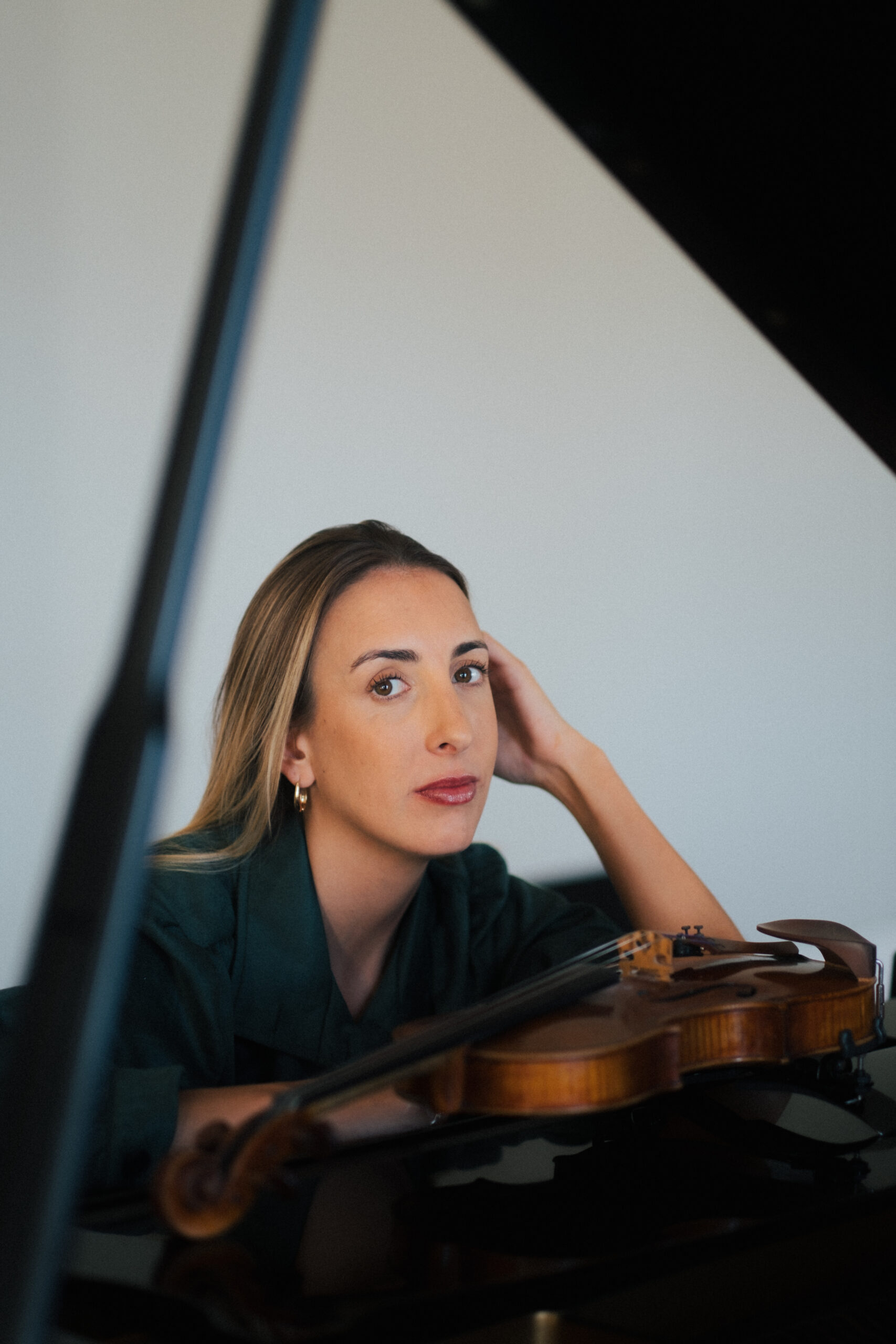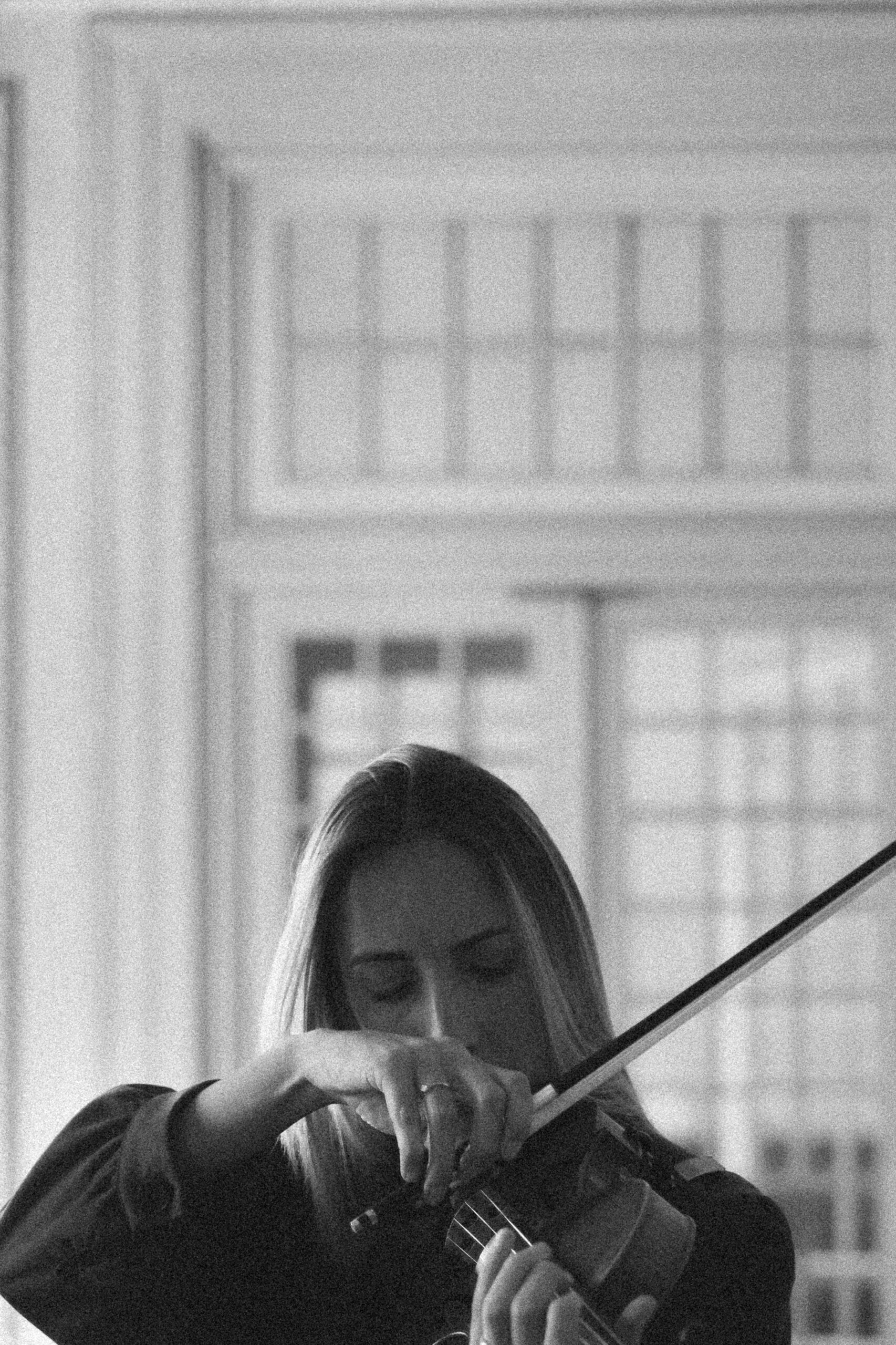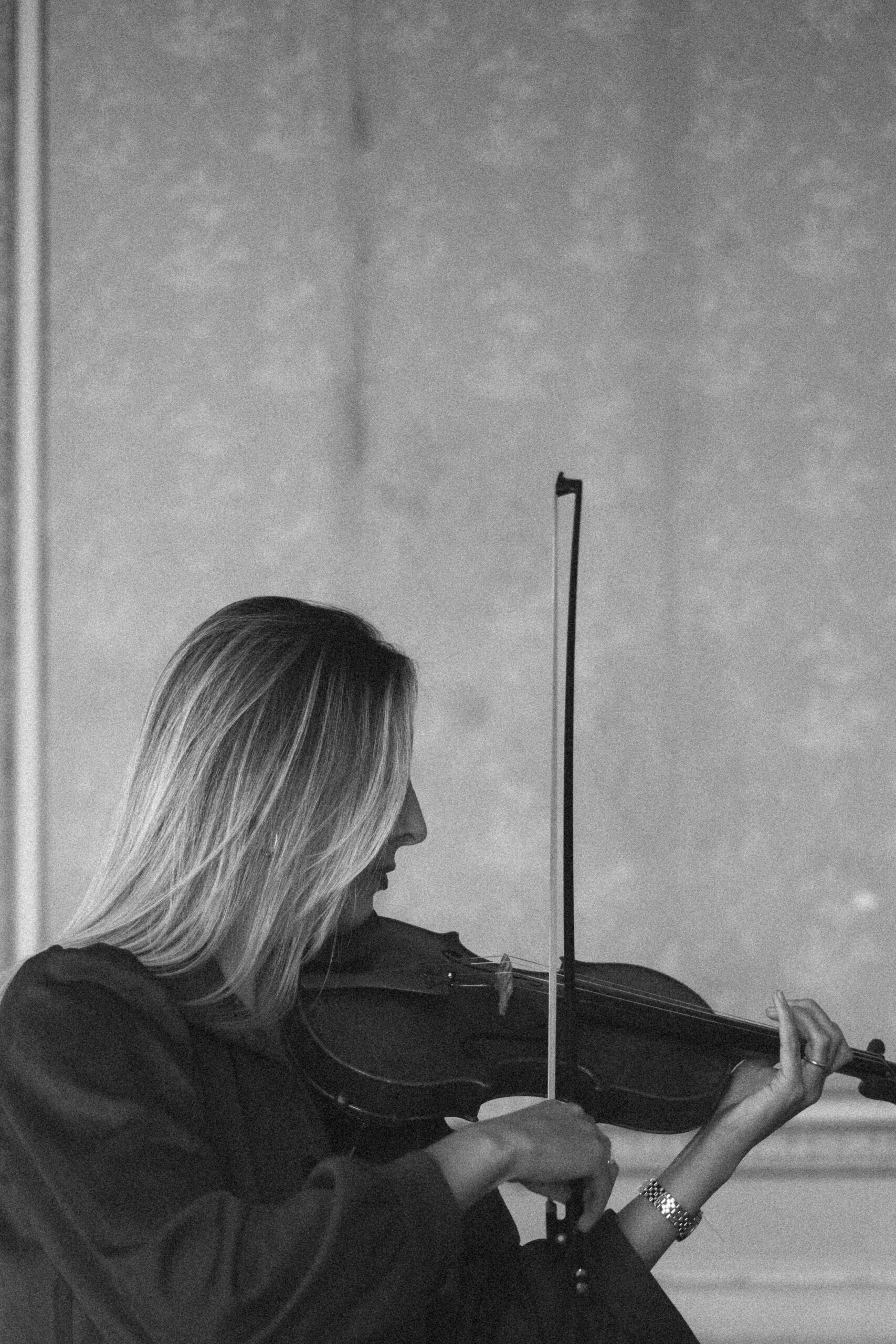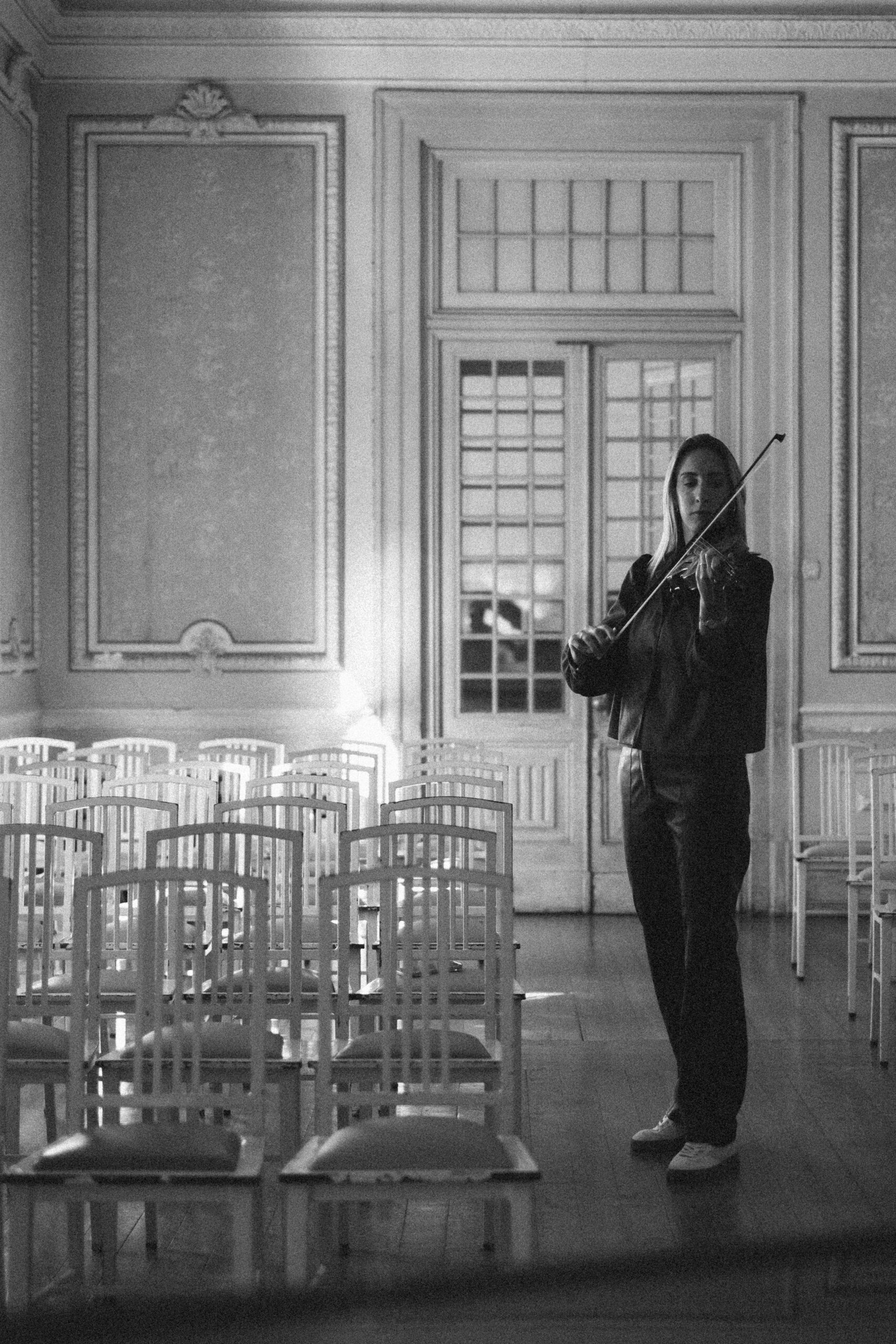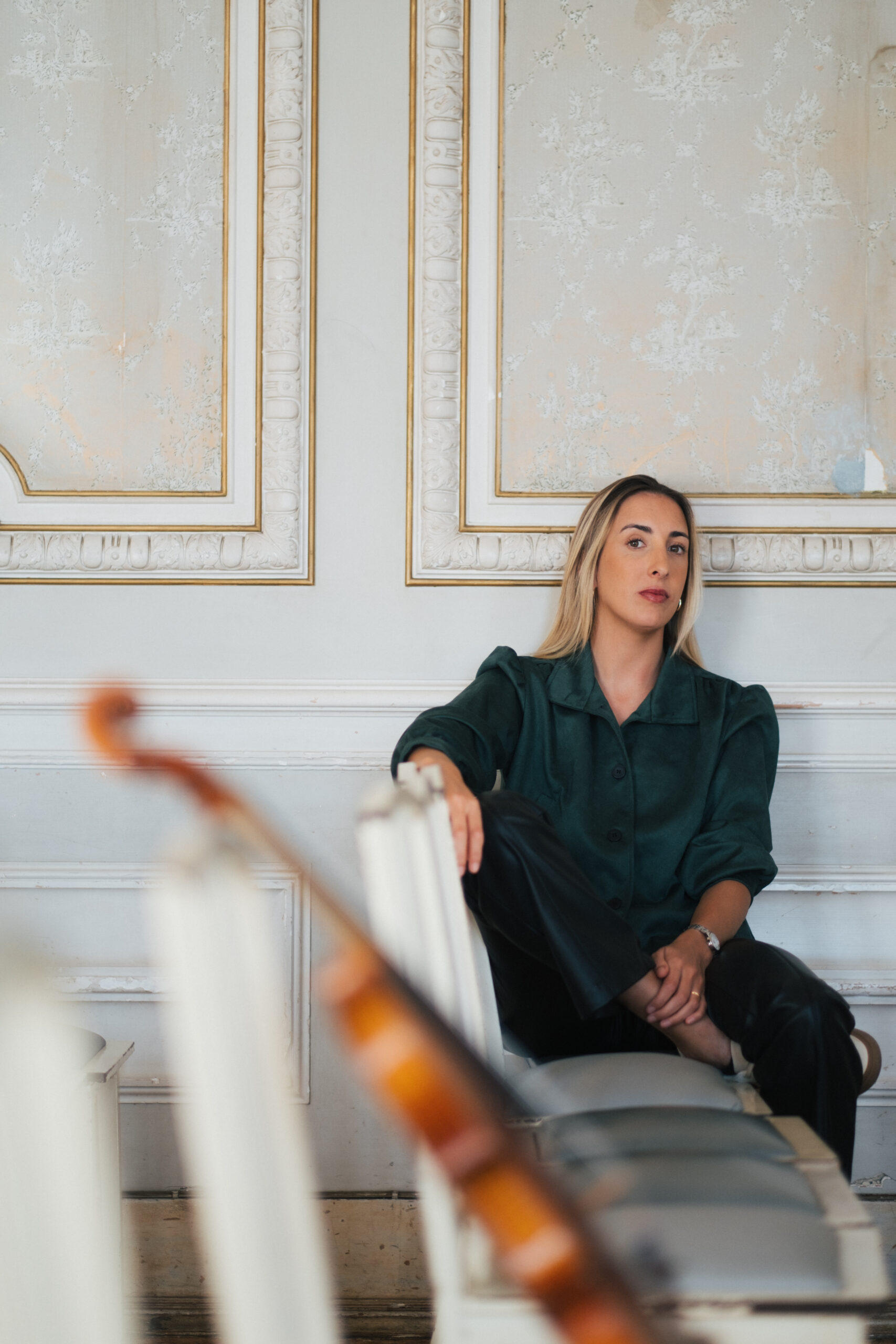
Málu Garcia
Words and photos: Tomás Monteiro
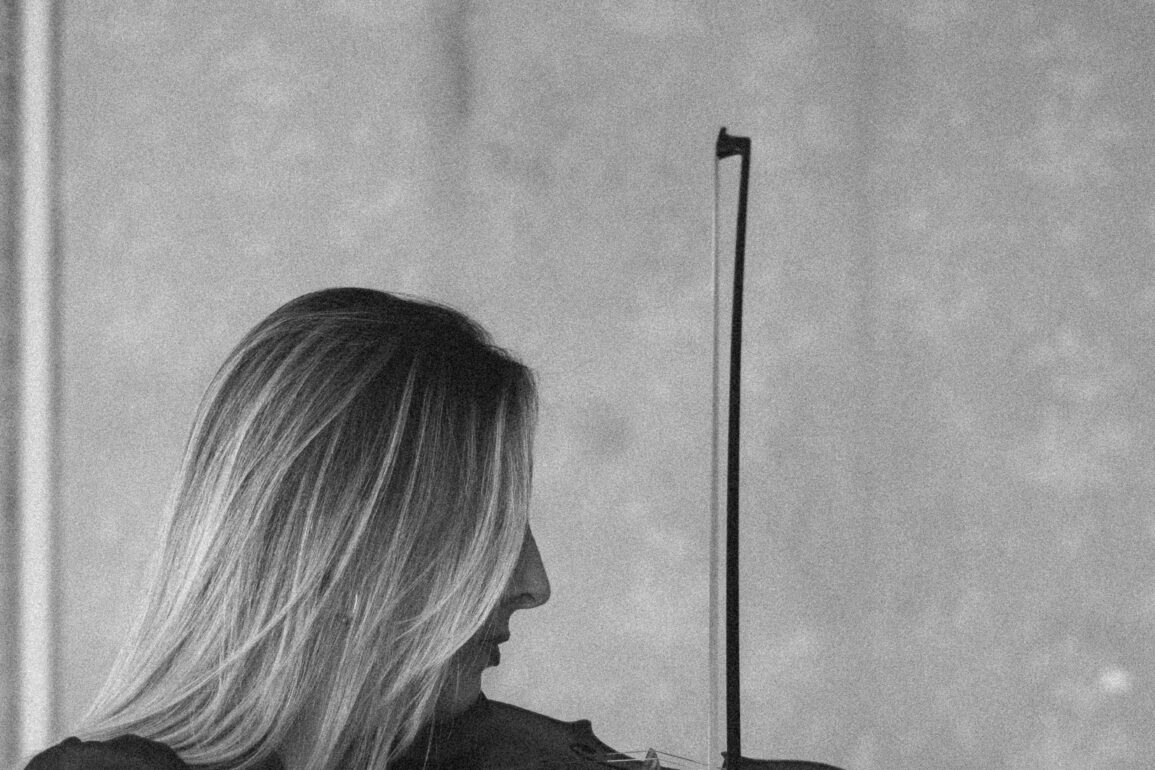
As all of the people who are able to pride themselves of being called a professional violinist, Malú Garcia began to learn how to play the violin at a very young age. As most of the people who came so far to being called professional violinists, she has had a peculiar relationship with the instrument she has been playing and perfecting for twenty three years.
This intimate and intricate relationship with an instrument only occurs when you start to learn the craft at a very young age. Her first experience with it happened at the age of six years old, when she was introduced to all the instruments she could option from. Two years later, she ended up choosing the violin and, from that moment, she became a music student. This came to be a decision that defined the rest of her academic years and overall life.
Music students, from such an early age – at least, at most prestigious music schools – are told they need to excel at technique dominance, performing progressively difficult pieces all chosen to each and every individual, disregarding characteristics that might differ them from one another. This happens to be the right approach to some and less effective to others; you are handed answers rather than the space to make the right questions to develop an healthy relationship with an instrument that is intended to become an extension of your limbs and, in the best case scenario, your livelihood.
Nevertheless, it has been more than proved how this regime develops a lot of faculties that are almost disregarded by those outside of such practices, being some of them one’s development of sensitivity, taste and ability to work among peers. That’s something that Malú’s mother, a trained pianist, knew and wanted for her children to learn through a musical education, though she would become the only of four daughters that pursued a professional career in music. During their upbringing they were exposed to the composers they had to practice pieces by, but also to a whole lot more of songs from a wide spectrum outside of classical.
She spent ten years as a student at Academia de Música de Santa Cecília (Lisbon, Portugal) – where she currently teaches – before leaving to Évora (Portugal) to get a degree and, later on, enrolled in a post-graduation in Royal Welsh College of Music and Drama (Cardiff, Wales).
There in Cardiff – where we first met – she connected with some life-changing aspects that would become pivotal to her artistry: a higher amount of repertoire, a completely new fingering technique she had to learn from scratch, but felt more natural to her, and new approaches to both the violin and music in general, provided by people from all over the world who, as her, went there to study. This contrasted with her previous experience on which she was taught to chase an ideal of perfection that is and will always be unattainable, therefore making her peculiar relationship with the violin much healthier now.
While she was abroad, she frequently came back to Portugal to work in various projects and with different people. Those opportunities made the tie she had with her home country pull her back once she graduated from college in Cardiff. Playing violin in groups that collaborated with artists outside of the classical world, such as Carlos do Carmo, Sérgio Godinho and Capitão Fausto, painted a new horizon that to this moment was merely outlined in her mind. Those who start to play music at such a young age can excel at playing written pieces but very few are encouraged or brave enough to start asking outside the lines of the treble clef and to engage in different genres that could and can ultimately enrich one’s artistry. As a teacher herself – at the school where she started her musical journey -, she tries her best to add what she felt that lacked when she was young. Of course technique and pitch accuracy is foundational to this craft but what else do these pieces awaken on who plays them and how can they make it more of their own?
Malú started to explore new repertoire and how her instrument would sound in different genres, broadening her practice in multiple environments. Some of them have had a longer and deeper contact with the violin than the others but she still went to experiment with jazz, pop and with a well respected genre that no one had yet dared to touch with their bow called Fado. For years she went to fado houses (casas de fado, typical restaurants where you listen to a small ensemble playing traditional songs) to improvise with portuguese-guitar players and fado singers, trying to establish a dialogue with such a specific instrument and genre.
From all of these influences she recorded her own album that came out in 2022, entitled Caminhos. The group she formed to create this album had a completely different setup from what it was common as they had to perform repertoire with roots from portuguese traditional music, baroque, tango, jazz and morna, turning the violin into a world music relic in the center of the stage. Doing this almost blindly – as she refers the lack of management knowledge as a tremendous gap in music education – and putting away the fear of being put in a box distant from the classical world she grew and worked in, she kept showing these pieces to friends who saw the value in what she was doing, even though it was something new, and encouraged her.
After starting to make a name for herself as a solo artist, she played with Capitão Fausto again, Teresinha Landeiro, Tim Bernardes and Beatriz Felício. She has also played with renowned orchestras as Orquestra Calouste Gulbenkian and often collaborates with Martim Sousa Tavares on some of his projects. In 2025 she premiered a show in RTP2 called Outras Paisagens de um Violino, after Daniel Gorjão (curator and head of performing arts of RTP2) accidentally saw a concert of her thinking he was attending a concert of the brazilian singer Malu Magalhães, and later inviting her to do this as he saw what she was doing as something quite unique. This was a show envisioned by the both of them and on which she opened up this new world she has been progressively drawing.
Adding to the roster of artists she has collaborated with, she soon will add the name of the genre bender from Barcelona, Rosalía, playing in the first violins section of the Heritage Orchestra in Lisbon. She confesses that it was her latest album that drew her to Rosalía’s work as she absolutely loved what she did in Lux. After listening to it she got more interested about her previous work, submerging herself in it. Both of these women have a specific desire to create dialogues between genres by having a ‘what if?’ mindset when they are creating. In the end La Yugular, Rosalía makes a juxtaposition between different sized objects, saying they fit in each other, all of them creating both lyrically and sonically a sense of overflowing that serve as the best metaphor for artists like these that have an urge to pour ideas in new glasses.
Malú Garcia will perform in Torres Verdas on April 18th.