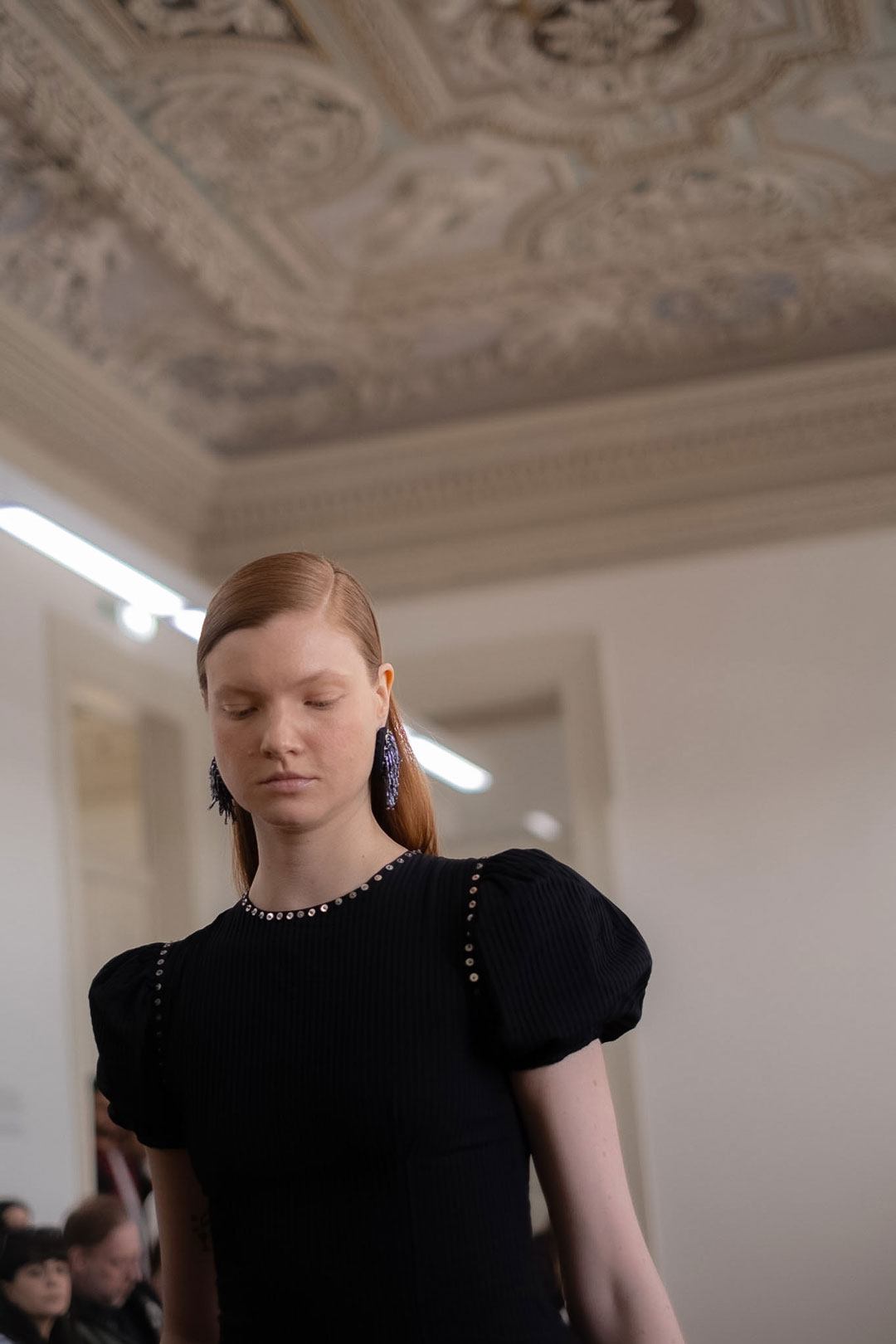
At Béhen, “the pieces become a kind of translation of that saudade”
Words: Joana Moreira
Photos: Tomás Monteiro
There are brands that turn to the past as an exercise in styling: a vintage reference, an inherited piece of embroidery, nostalgia carefully packaged for the catwalk or for a contemporary wardrobe. And then there are projects such as Béhen, where memory is not just a trend or an aesthetic device, but a founding structure. From the beginning, the Portuguese brand created by Joana Duarte has been built on the idea that clothing can function as an emotional archive and as a tool for cultural preservation.
Founded in 2020, after Duarte spent time in London and India, Béhen emerged at the intersection of ethical fashion, craft research and Portuguese textile heritage. The brand’s name — béhen means sister in Hindi — reveals this bridge between geographies and affections. In various interviews, Joana Duarte has described the project as an attempt to bring together social impact and fashion creation, but also as a way of preventing the disappearance of traditional techniques passed down between women.
This emotional dimension permeates the brand’s entire narrative. The designer often recalls her grandmother’s phrase: “one day this will disappear, nobody wants it”, as a founding moment for Béhen. The “this” referred to embroidery, trousseaux and the domestic techniques of handmade production that for decades had lived in Portuguese drawers, chests and homes. In this context, saudade is not only melancholy: it is also an awareness of imminent loss.
We ask her to go back to the beginning of the project. She explains how the impulse behind the brand was never linked only to the visual value of the trousseaux. “When Béhen began, the main question was not only that I had my family’s trousseau and believed it had potential in terms of design and fashion, but also that I heard my grandmother say over and over that embroidery was going to die and that nobody wanted to learn”, Joana Duarte told Portuguese Soul. “In other words, when the project began, I had already defined these two challenges to respond to”.
That is precisely why speaking about Béhen means speaking about saudade. Not as a national cliché, nor as a folksy romanticisation of Portugal’s past, but as a language of continuity. Asked whether her creative process is rooted in saudade, she answers without hesitation: “In Béhen’s case, yes, and continuously. The collections may have different concepts each season and distinct sources of inspiration, but the foundation is always the same and is inevitably linked to these ancestral materials and techniques, which carry all this emotional weight. The pieces become a kind of translation of that saudade”.
There is an important aspect to this idea of translation: Duarte recognises the impossibility of fully transforming such an abstract emotion into a physical object. “Translating all of this into something 100% tangible is impossible”, she says. “Even in the most elaborate pieces, where the relationship with a particular technique or region is obvious, I often feel that it is not enough and that it does not reveal all the layers that are present for that piece to exist, nor the message behind it”.
This tension between presence and absence may be precisely what defines Béhen’s aesthetic. Each piece functions almost as a remnant: it carries memories that are never completely revealed, fragmented stories of women, places and different times. There is something deeply Portuguese in this relationship with the invisible, the idea that what matters most is not always what you immediately see.
In the brand’s early years, this memory was embedded directly in the materials themselves. Béhen began by reusing old bedspreads, tablecloths, curtains, and trousseaux found at markets, inherited from family members or sent in by women from different areas of the country. The pieces already had a previous life. They bore the marks of use, domestic stories and accumulated time.
Today, although reuse remains part of its work, the brand is increasingly creating pieces from scratch in collaboration with embroiderers and craftswomen. This shift could be read as a move from the physical archive towards something more conceptual, but Duarte rejects that simplistic interpretation. “When we began with old trousseaux, there was a direct relationship with the object as memory and with all the weight those old pieces carried”, she explains. “We continue to work with old materials, not least because many clients are looking for that weight associated with the material and its history”.
At the same time, she stresses that the real goal was never simply to preserve old objects. “When the project began, I had already defined these two challenges to respond to”, she says, referring both to the creative potential of the trousseaux and to the gradual disappearance of traditional embroidery. This is where Béhen ceases to function merely as a fashion brand and begins to operate almost as a platform for cultural continuity. “This question of continuity carries more and more weight, because, in truth, without continuity, old tablecloths do not last forever”, she warns. She adds a phrase that sums up much of the brand’s philosophy: “An old trousseau is a closed archive; an embroiderer working today is an archive in motion”.
This phrase helps us understand one of Béhen’s most interesting activities: the transformation of traditional craft from static relic into living practice. It is not about preserving the past intact, but about allowing it to continue evolving. This continuity also entails a shift in the very meaning of memory within the brand. While, at the beginning, the old garment functioned as a physical document of a family and collective past, today memory is increasingly rooted in the preservation of savoir-faire. Saudade, then, in no longer found only in the inherited garment; it also comes to exist in the gestures repeated by contemporary craftswomen.
This balance between preservation and contemporaneity is also what prevents the brand from coming across as merely folkloric. In Portugal, the use of traditional references in fashion often oscillates between tourist-oriented exoticism and superficial nostalgia. Béhen tries to move away from that approach. “I think avoiding folklore means not reducing techniques to decoration”, she explains. “That habit is very common. Often, technique is seen as something that is added to a piece, rather than as part of the design from the ground up”.
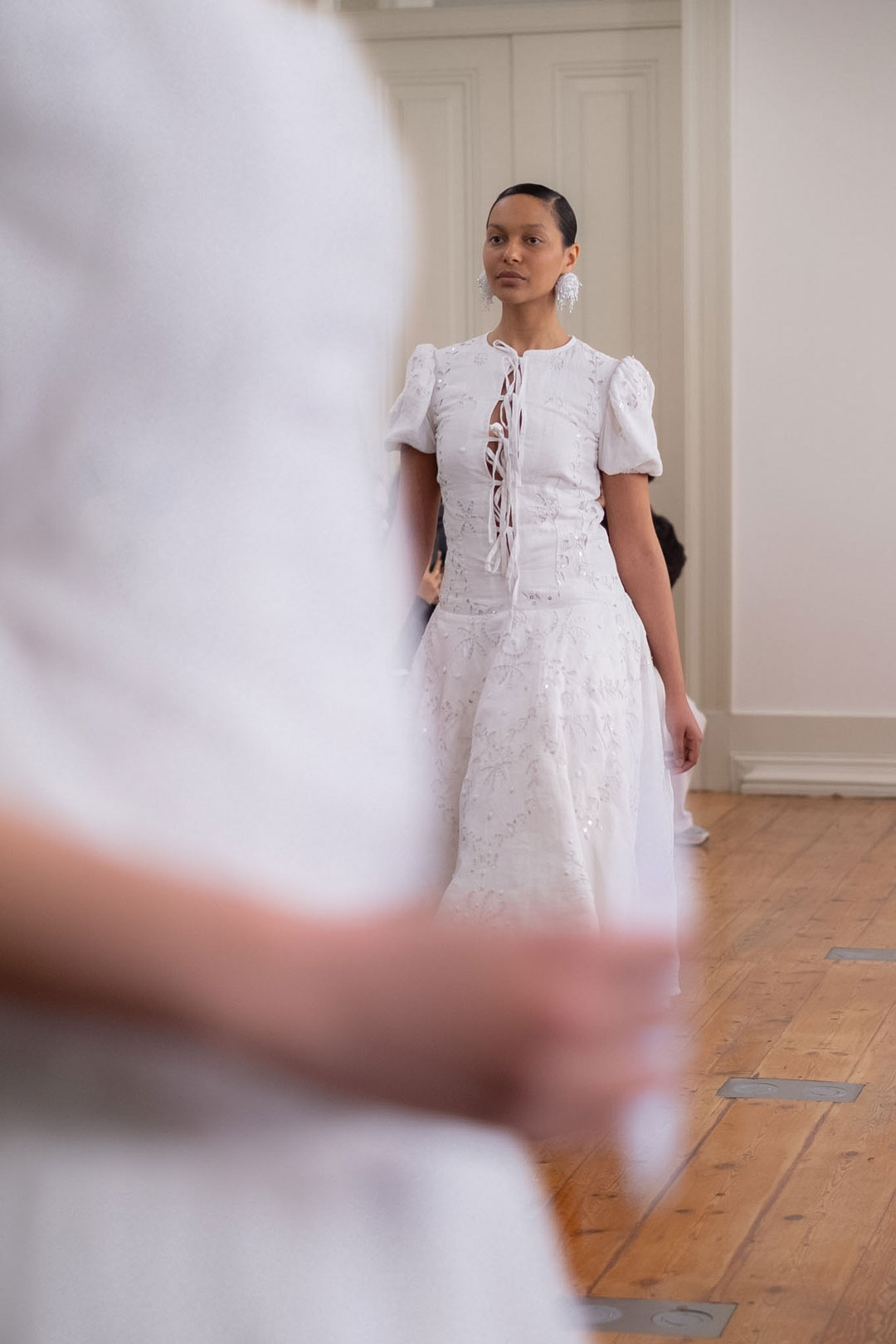
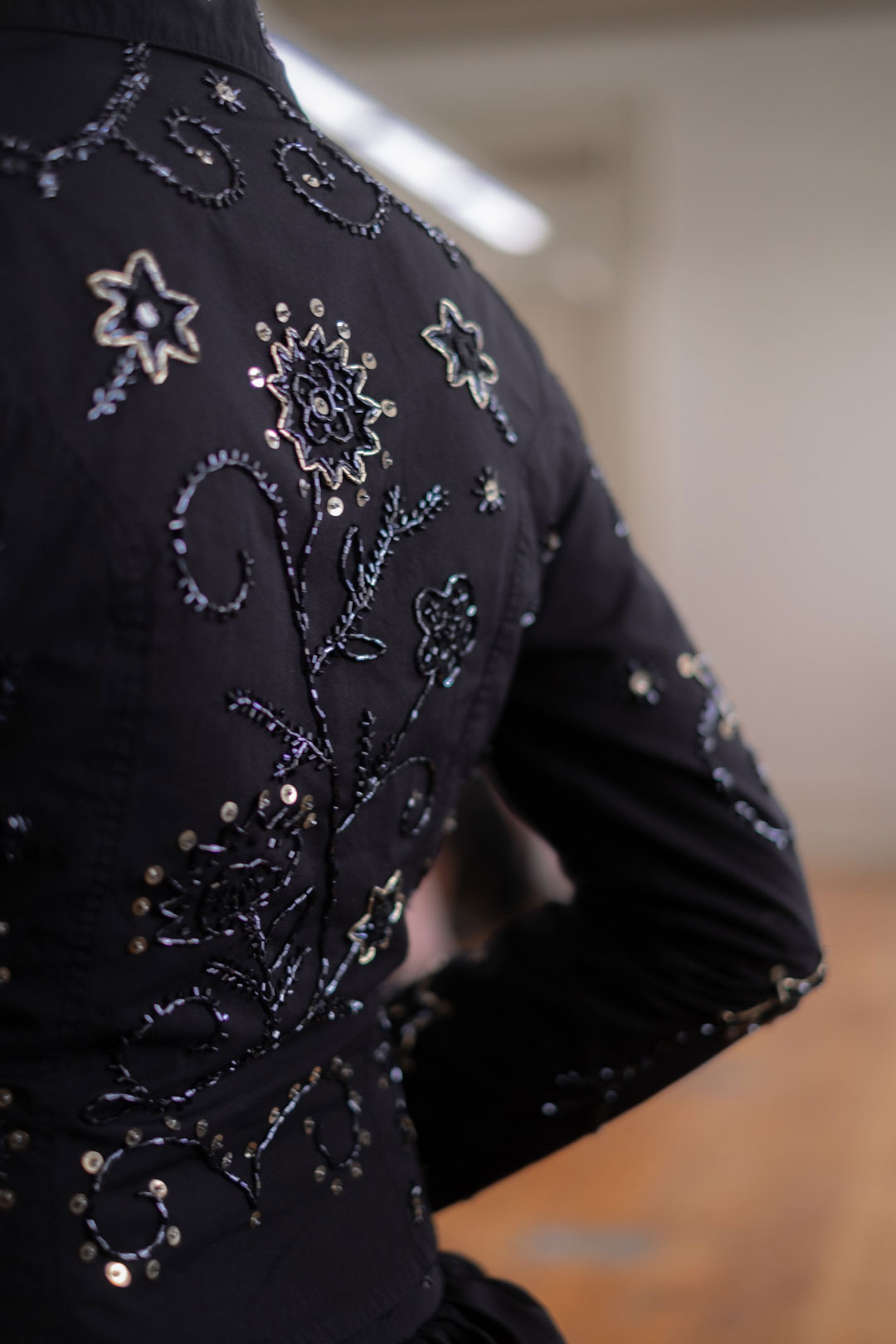
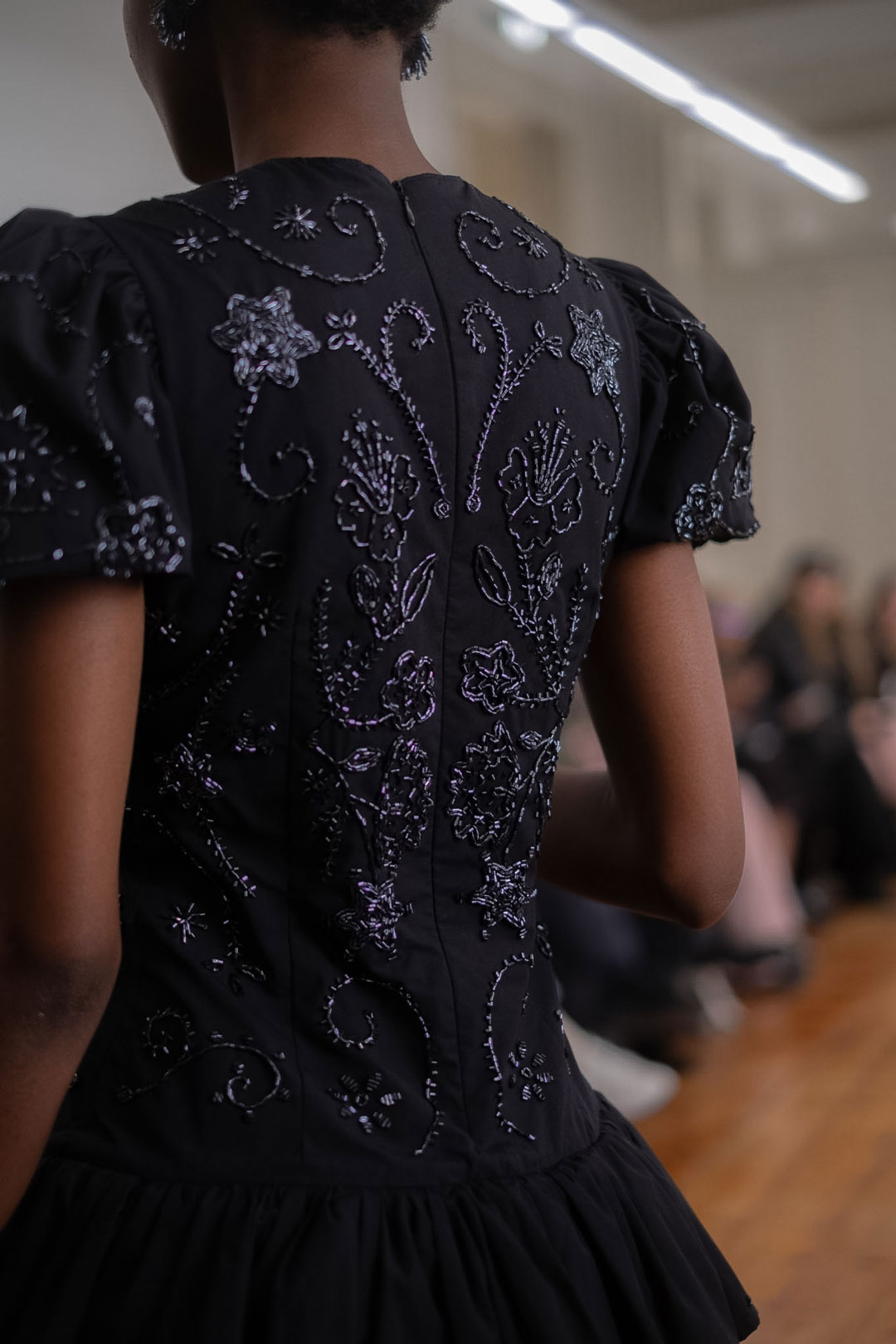
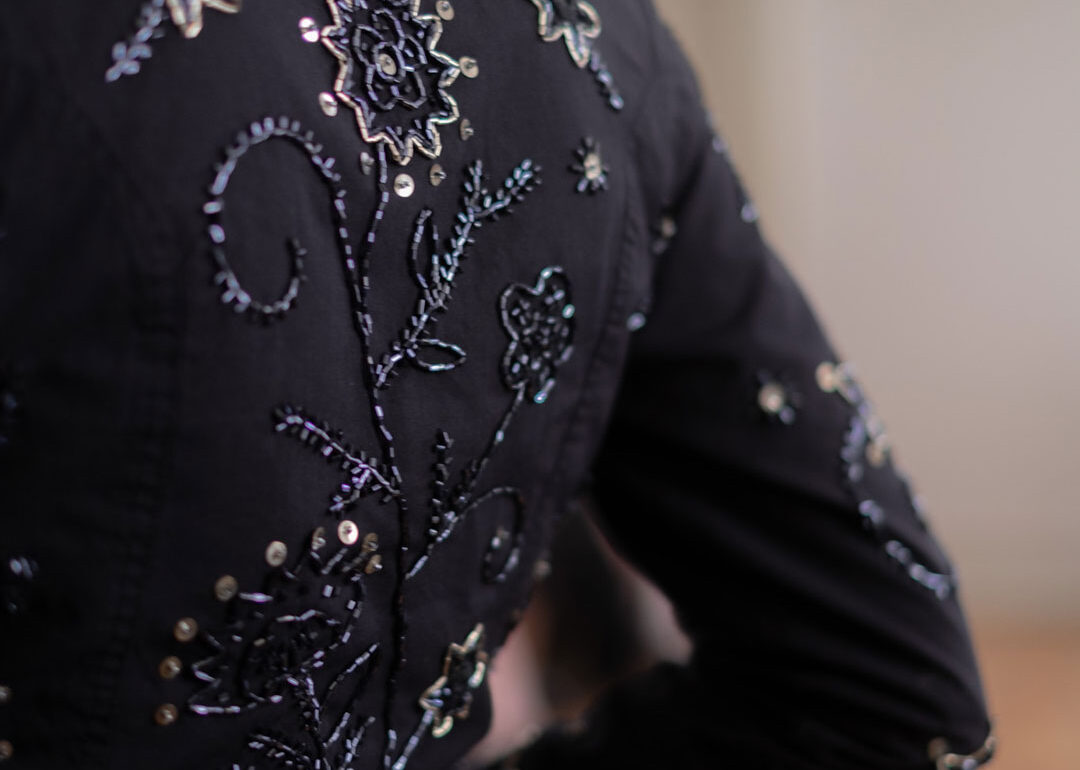
The difference may seem subtle, but it completely changes the relationship between craft and design. At Béhen, embroidery is not applied as a later decorative element: it is an integral part of the garment’s construction from the very beginning. The technique shapes the cut, the material and the structure.
“This also has to do with the design references and with Béhen’s objectives from day one, which were to show my sisters, and the new generation, that traditional techniques are not only those we see in our grandmothers’ drawers, and that there is room for them in pieces and even in more contemporary fabrics”, she explains. “This is one of the tests we apply most often: pushing the boundaries of techniques, applications and materials, beyond linen and cotton. Bringing all this into the contemporary world”.
The brand’s own evolution reflects this ongoing search for renewal. While the first collections were closer to pure upcycling, driven by the materials available in family archives, the growth of a network of craftswomen led to a more complex approach. “Over time, the focus shifted increasingly towards creating a network of craftswomen across the country and making pieces from scratch”, she tells the magazine. “This also forced me to learn some of these techniques myself and to truly understand the technical work, because otherwise it would be very difficult to design embroidery, weaving and so on without understanding how they are put together”.
Duarte also recalls that the relationship with craftswomen was present from the brand’s earliest days. “There were already pieces embroidered from scratch when Béhen started, made by my mother and grandmother for the first collections. There were also pieces by migrant women, part of a project created by the Aga Khan Foundation, who I worked with on the first collections”.
Even so, Duarte rejects the idea of an aesthetic break between early Béhen and the brand today. “I do not believe this transition has changed the brand’s aesthetic narrative”, she says. “What has changed is more of a natural evolution over time, with me as a designer”.
This close relationship with the craftswomen also has a direct impact on the narrative construction of the collections. Béhen often works from conversations, personal stories and memories passed down orally. “The craftswomen give a great deal of feedback: on the type of embroidery stitch they think is most beautiful or less commonly used in the region, and they show us pieces from their own trousseaux for comparison”, she says. “But there have also been conversations in which small details from personal stories or local traditions have emerged and ended up influencing the narrative of the collection, or even the design of the piece”.
She stresses that the creative process often unfolds in precisely the opposite direction to what is usual in contemporary fashion: “Because the technique is not simply added afterwards, the reverse often happens: the piece is conceived in order to adapt to a technique”.
It is interesting to note that, in an industry dominated by forecasting, trend algorithms and visual speed, Béhen continues to build part of its language through word of mouth. Design emerges as much from aesthetic research as from long, unhurried conversations. Perhaps that is why the brand is also deeply connected to the idea of time. Not only historical time, but the slow time of handmade production, an almost radical concept in the contemporary industry.
“Craft helps us remember what time really means”, Duarte has said in other interviews. This slowing down is visible in the brand’s own operational structure, where the rhythms of the embroiderers do not always coincide with the accelerated logic of the market. “The pace at which the atelier has to move in order for the company to exist is not the same as the pace of embroidery and craft techniques”, Joana tells us. “We have to have many things moving at the same time. It’s a juggling act”. The description reveals the constant tension between the fashion calendar and human rhythms. “Many of the craftswomen are already of a certain age and can no longer do the work; others stop for weeks because there are festivities, or because they have their grandchildren at home and can’t get any work done”, she adds.
This human dimension is central to understanding Béhen. Unlike many brands that use craft as a seal of authenticity, Duarte insists on keeping the people, limits and timeframes involved in the process clearly visible. But perhaps one of the designer’s most complex reflections is linked to the very concept of trousseau. In Portugal, the trousseau carries both emotional memory and historical significance. It represents care, heritage and the passing down of tradition through the female line, but also a long tradition of invisible domestic labour. “There is a tension between embroidery as a tool for constructing femininity and, at the same time, as a space of silent subversion”, she says.
Duarte refuses simplistic or celebratory readings. “There is no doubt that the trousseau and these practices were, for a long time, a gendered burden”, she explains. “These techniques were profoundly undervalued because they were associated with women and domestic work, something that persists to this day”. She notes that this trivialisation remains very present in Portuguese culture. “In Portugal, this is very visible: almost everyone has someone in the family who embroiders, knits or crochets, but this is often said lightly, almost in a decorative way, with no awareness of the knowledge, time and technique it involves”, she says. At the same time, she recognises the paradoxical dimension of these domestic environments. “We cannot ignore the fact that this domestic space was also one of the few places where many women were able to create”, she says. “Embroidery, precisely because it was seen as minor or domestic, allowed for a form of expression that did not pass through public discourse”.
Perhaps this is precisely where saudade gains another layer within Béhen. Not as a naive desire to return to the past, but as an attempt to reread critically what has been passed down between women. “This is why the image of the ‘quiet woman embroidering’ is so misleading”, Duarte says. “The body is still, but the mind is in motion, and often it is in that repetitive gesture that narrative, memory and even resistance are to be found”.
The phrase seems to sum up not only a vision of craft, but of the brand itself. Béhen operates in this ambiguous territory between silence and expression, tradition and transformation, memory and contemporaneity. Over the past few years, the brand’s international growth — from presentations at ModaLisboa to London Fashion Week, as well as the collaborations with Levi’s and features in international publications — has shown that there is room for a project that works against the dominant logic of speed.
Still, the question of continuity remains central. And perhaps it is here that saudade becomes less contemplative and more political. Asked about the future of craft techniques in Portugal, Duarte is forthright: “I believe that practically all traditional techniques will disappear if nothing changes”.
Although she recognises a growing interest among younger generations, she points to structural obstacles. “Many do not know how to begin”, she notes. “There is also the fact that, politically, a great deal should be reassessed to make it easier to work as an artisan, in terms of income and benefits”. According to Duarte, the survival of these practices depends on the concrete possibility of making a dignified living from them. “Without showing that it is possible to live from these techniques with dignity and protection, it will be difficult for the new generation to dedicate itself solely to this work”.
Ultimately, Béhen seems to exist precisely in this space of resistance: between the imminence of disappearance and the continuous attempt to endure. Here, saudade ceases to be merely a romanticised national emotion. It becomes a working method, an aesthetic language of preservation. It is not a matter of looking back because of an inability to move forward. It is the understanding that certain memories only survive if they are continually reinvented.