
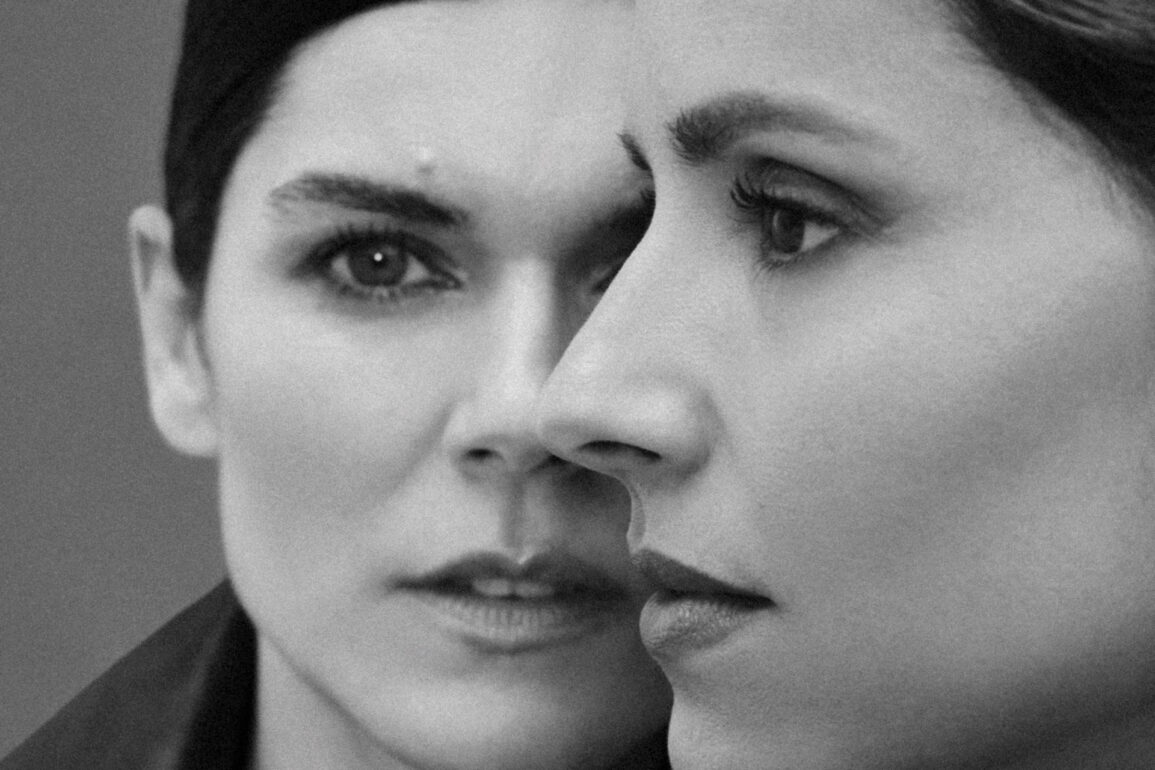
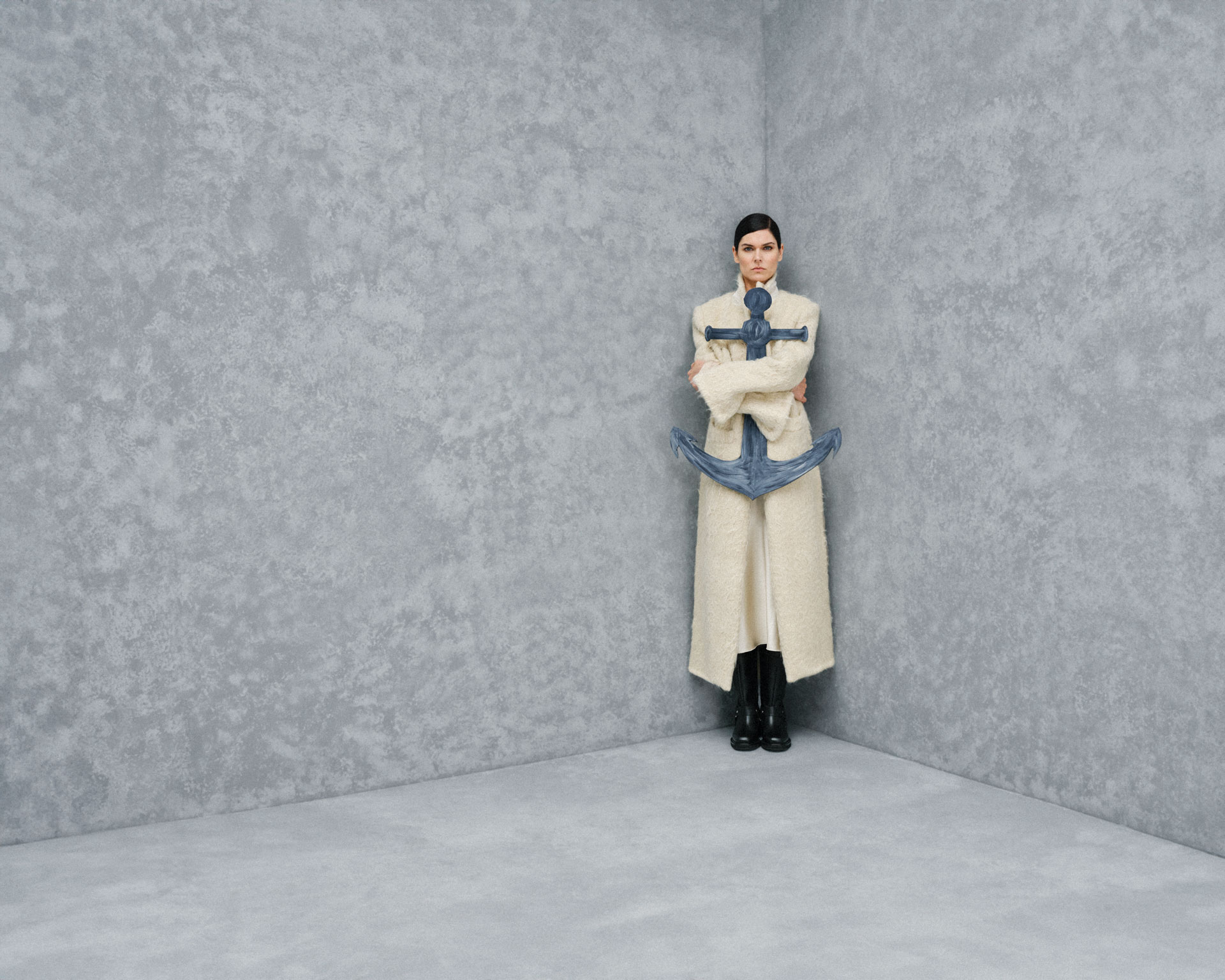
All footwear: JJ Heitor × Arndes; All clothes: Arndes
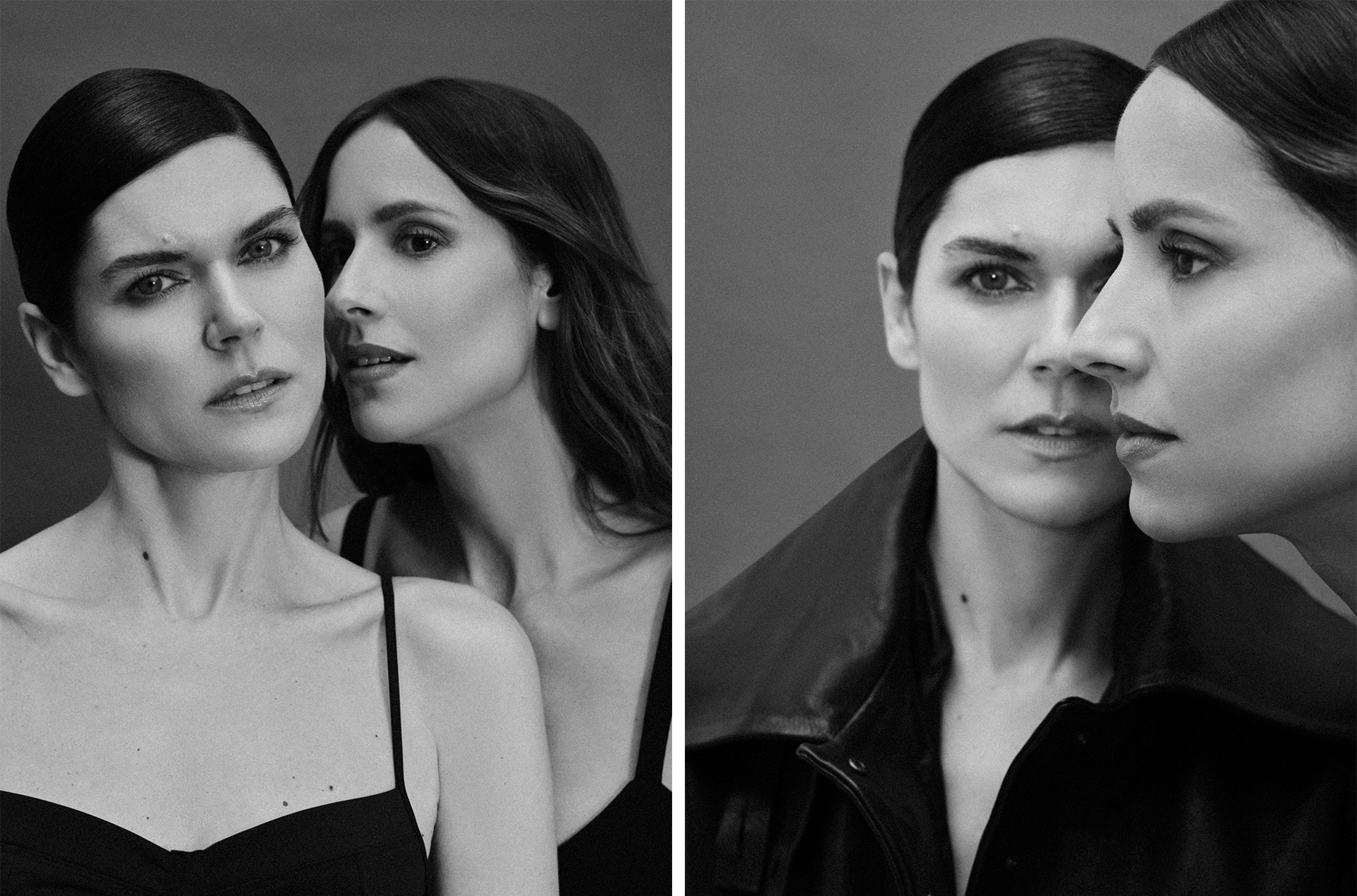
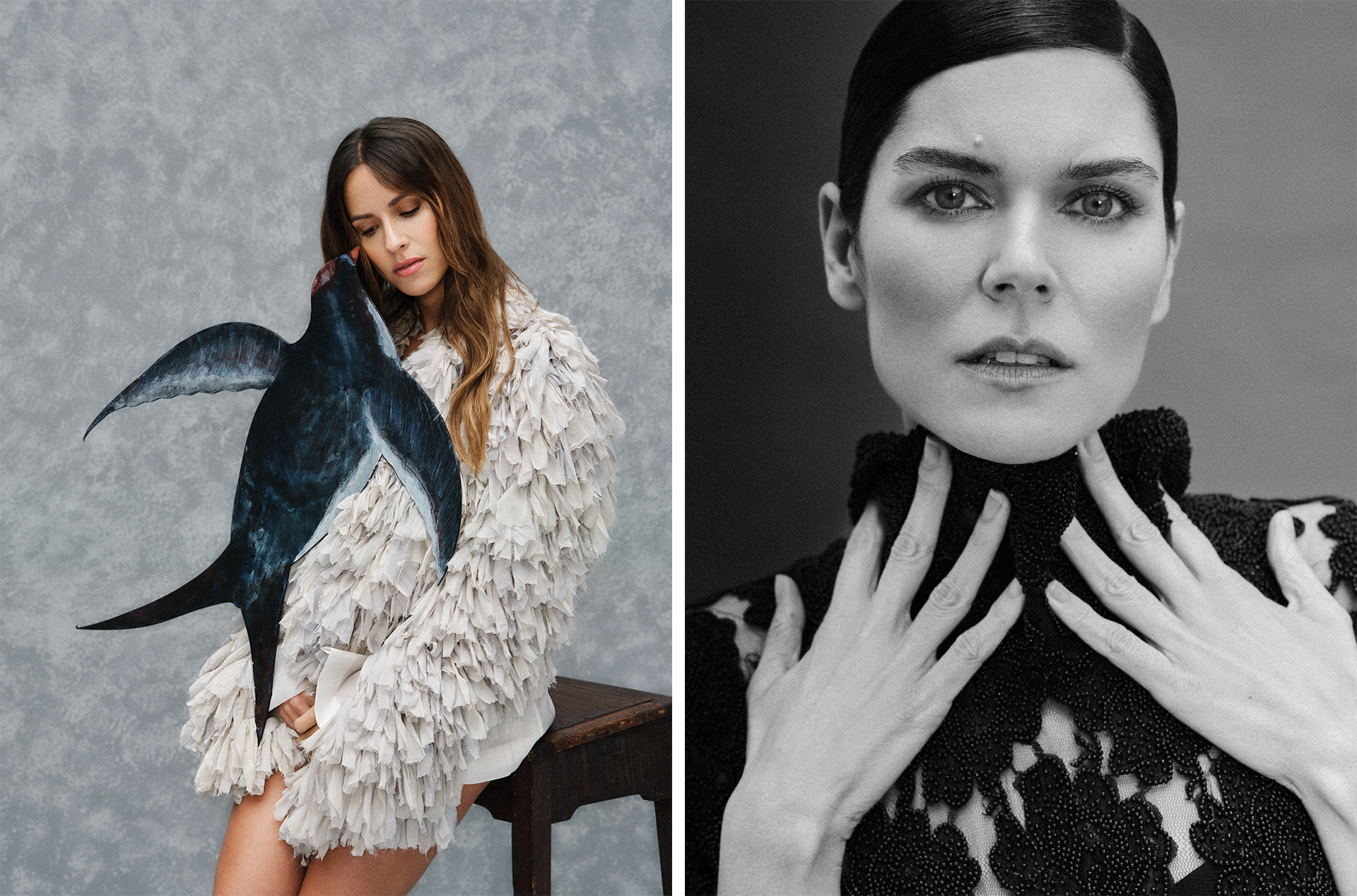
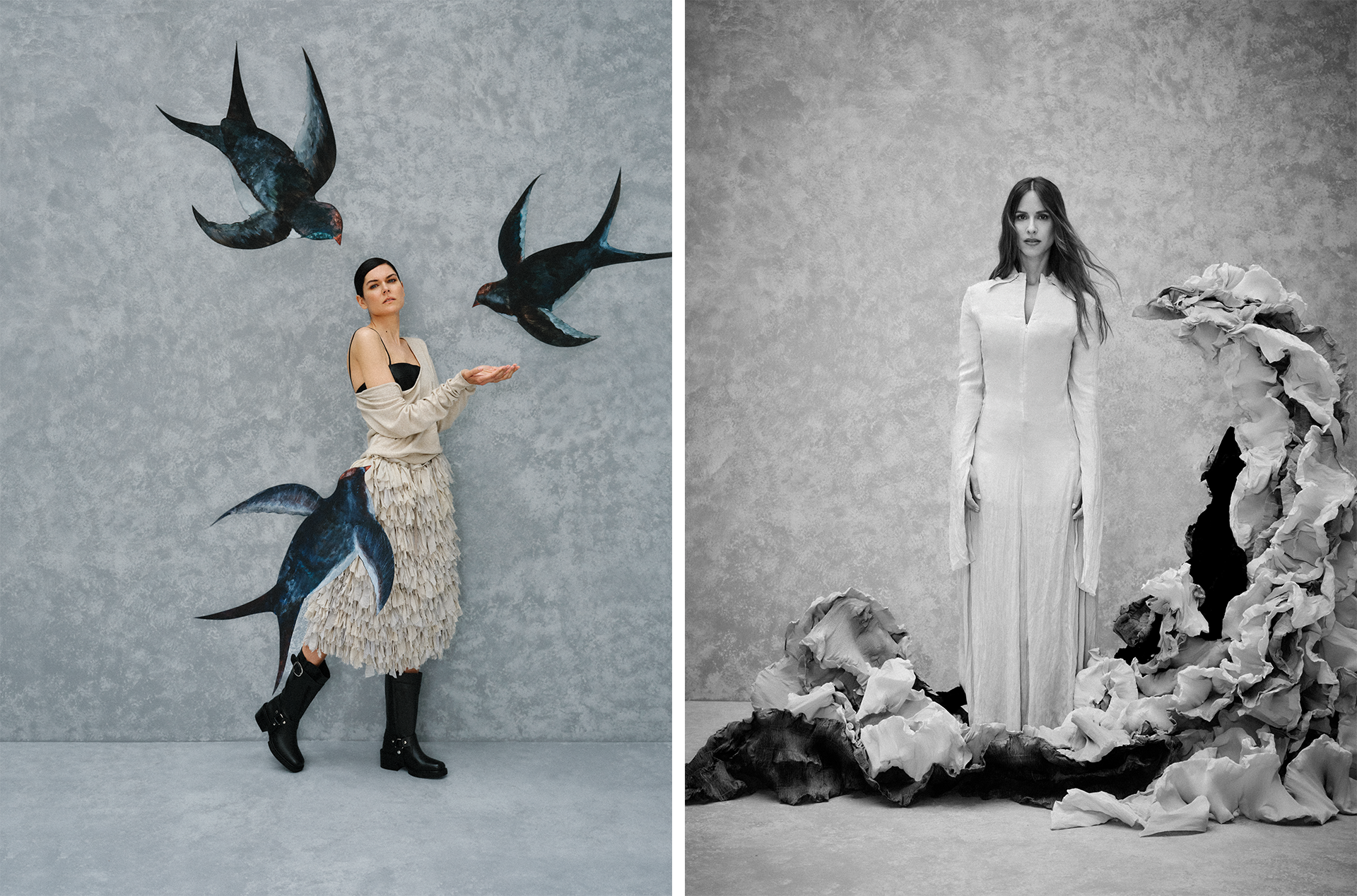
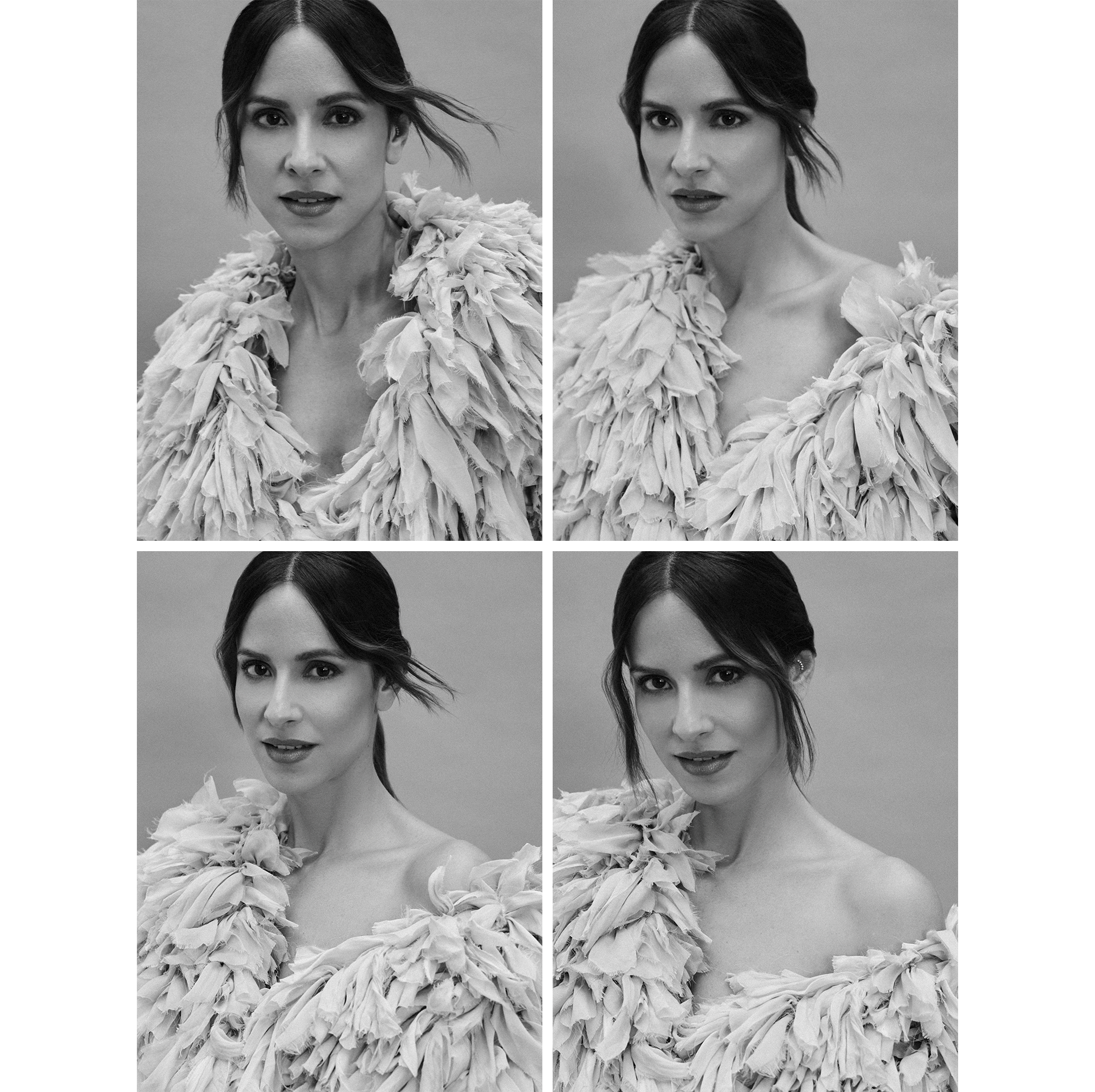
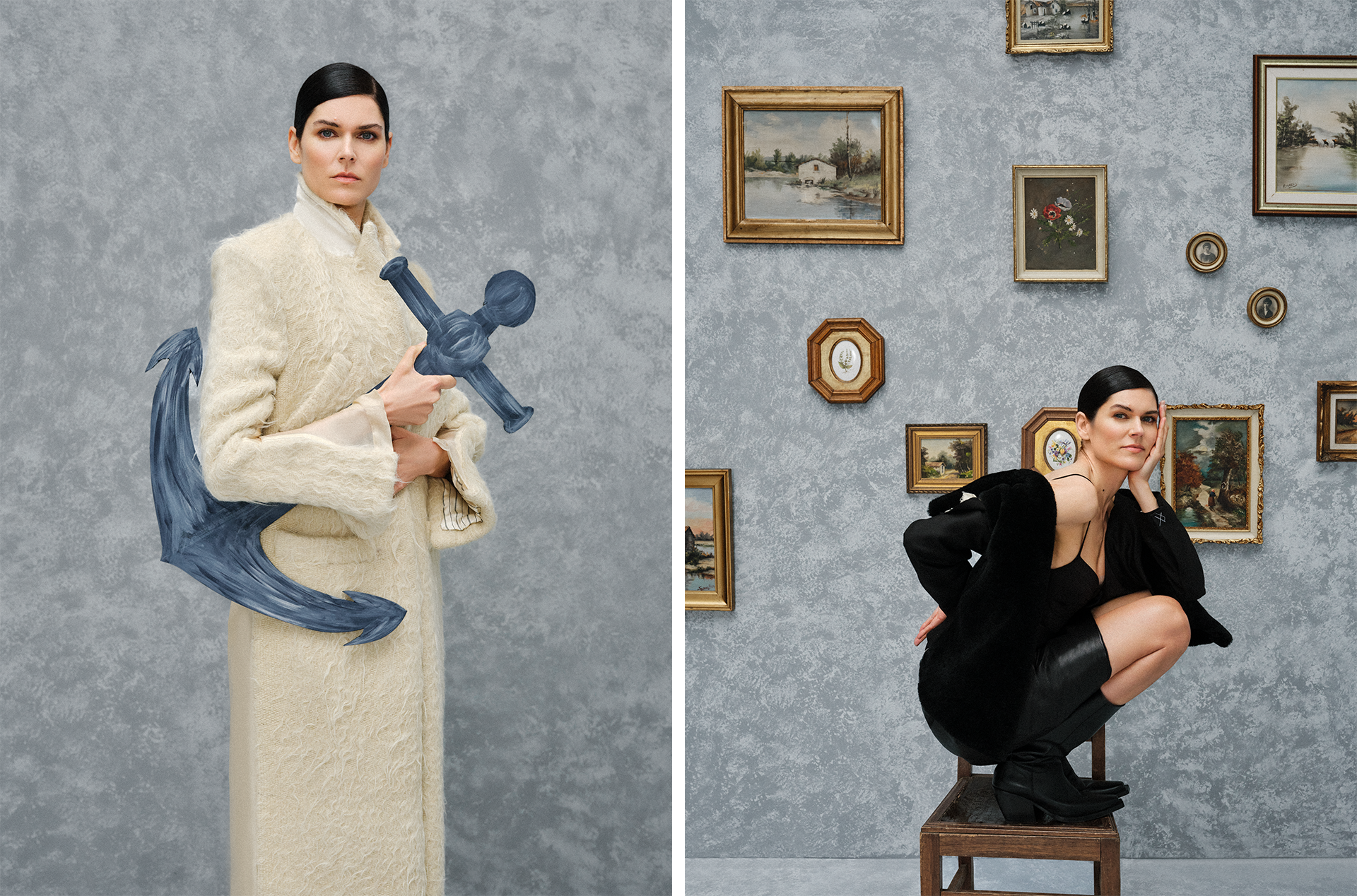
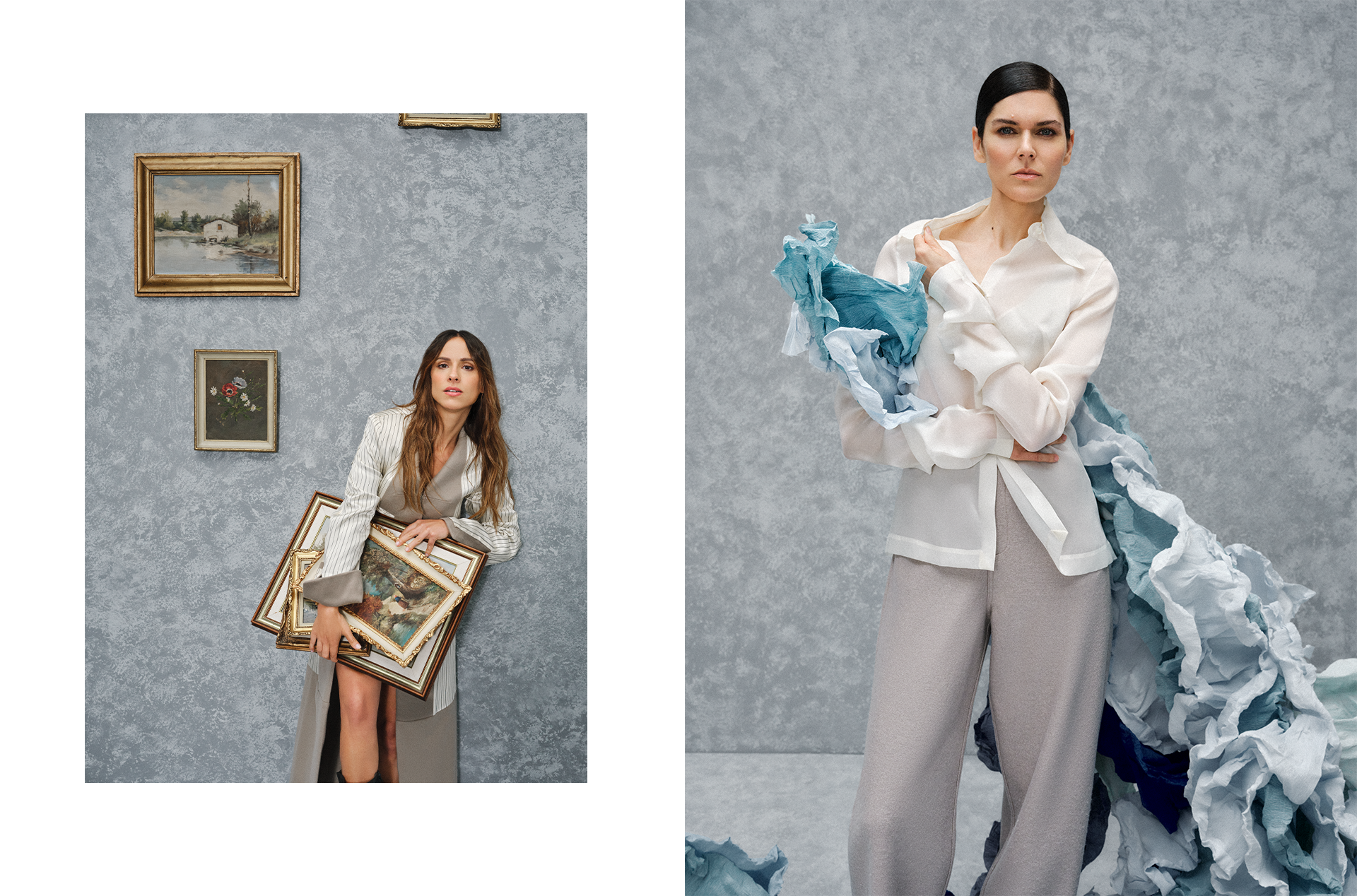
Photography: Carlos Teixeira
Styling: Fernando Bastos Pereira
Styling assistant: Nelson Lima
Hair: Edgar Venâncio
Make up: Cidália Faria
Props and set design: Snowberry
Talents: Mariana Monteiro, Sónia Balacó
Words: Maria Martinho
Sónia and Mariana: Two sides of the same search for the unknown
Sónia Balacó, 42, from Peniche. Mariana Monteiro, 37, from Porto.
They met in Lisbon in 2014, while working on an acting project, and have remained friends ever since. What they share is a curiosity for the new, a search for spirituality and a taste for what appears at first sight to be quite simple. What brings them together, and what sets them apart, emerges in these questions they put to one another.
M: What does saudade mean to you?
S: I have a somewhat tense relationship with this word, because I feel there is a lot of pressure on it, as if it were this thing that only we Portuguese have. I don’t feel that geographical proximity to a word that supposedly belongs only to us. I don’t attach to it that weight of Portuguese identity, but I have an emotional relationship with the word itself.
As for its meaning, for me, saudade is the feeling of love in absence. It’s feeling a love to which we no longer have access. It can be a love for a person, an object, a feeling, or a place.
S: If you had to choose a key moment in your life, what would it be?
M: I think it would be when I was 16. I always go back to that moment. It was an important moment in my life because everything changed. That journey I made from Porto to Lisbon with my mother, when I was approached in the street, gave me a future I had never imagined for myself.
M: If you had to define your greatest dream or desire, what would it be?
S: I think my greatest dream is not a dream for me, but a dream for the world. I would love us, as a species, to reach a place of peace and to heal this planet we live on. I feel we are at a defining moment for our species. If we don’t radically change our course now, I don’t know whether we will still be here in 100 years, or certainly not as we are today. It shocks me that this is not a priority.
S: Do you still have a childhood dream you have yet to realise?
M: My childhood dreams were very different from what I do today. In fact, I wanted to study astronomy, travel into space and experience the feeling of levitating, so I think I still need to go to a zero-gravity room. A long time ago, I found an essay I had written in Year 10 in which we had to describe a dream we had, and mine was exactly that: I found a cheque that enabled me to go to space.
M: Do you consider yourself someone who likes to take risks, or are you a little more cautious?
S: It’s a funny question, because I think I am quite cautious, but I think other people see me as someone who likes to take risks. Ultimately, despite the fear I feel, I am very drawn to the new. I want to experiment, to discover, to do things, and that always ends up being stronger than my fear of the consequences. But I do feel that fear. I am human, I’m not crazy. The fear of standing still, or of not doing what I have to do, ends up being stronger than the fear of what others might think. Going into the unknown is something that gives me pleasure as an artist. It means exploring something I don’t know. That obviously comes with fears, but it is what moves me, so it always wins in the end.
S: Tell us about a wonderful memory.
M: A good recent memory was finally taking part in a series in which I was able to speak Spanish, which was something I had wanted for such a long time. I moved to Madrid in 2021 also hoping to broaden my horizons and get to know another market, and I waited five years for an opportunity to work in this language. I think it’s always worth planting the seeds of what you want, because later you may truly reap the rewards. It may not happen when we want, or in the way we had hoped, but I always believe that something eventually comes of it.
M: If you had a gift, what would it be?
S: I can talk about something I’m working on in myself, something quite personal: my sense of community. At this present moment, we all tend to be very individualistic. We are all closed off in our own bubbles. Technology gives us the idea that we are connected, but it’s an illusion. We are very isolated, looking at our screens. I have realised, perhaps in the last few days or over the past month, that I don’t want to be someone closed in on myself, spending my life in one place reading or writing, occasionally going off to do collective projects and living a very uprooted life. That’s not what we are here for, in my opinion. As a species, we go further and we are better when we live in community. As someone who has always tended to isolate myself, I’m trying to participate actively in my relationships, whether personal, family, friendships, work or in our city. I’m trying to hold on to the idea that we can make a difference, or add something, when we have the gift of community.
S: Do you say goodbye easily to things, people, places, or circumstances?
M: I’m a bit of a drama queen in that sense. I don’t say goodbye easily. I’m better now. I practise detachment, because the more I do it, the lighter I feel. I become very attached to places and people. If I live in a house, when I move out I spend the last day there almost in a farewell ritual. I don’t like saying goodbye to people, but even so I find it difficult to inhabit that more melancholic place. It attracts me and, at the same time, it is difficult for me. With places, it has a lot to do with identity. It’s the feeling that the piece of Mariana that was built there might disappear when the door closes. It won’t disappear. It will continue, it will transform. I find it difficult to accept my own transformations. As for people, I don’t like goodbyes and I am a little needy.
M: How do you imagine yourself 10 years from now?
S: I hope I still exist, and that being alive on planet Earth is still a good thing. I would like to imagine myself as someone who continues actively pursuing art in various ways: continuing to work as an actress, of course, and continuing to write and publish. I would certainly like to have made a feature film by then, to have tried my hand at other literary genres I’ve not yet touched, and perhaps at other art forms I’ve not yet explored. On a more personal level, I don’t know whether I will be a mother, or whether I will end up teaching. I only know that, for as long as I exist, there will be a need for art and for art to happen as a consequence of a way of being in the world.
S: If you had the chance to go back in time in some way, would you do it or would you refuse?
M: I wouldn’t want to go back. No. Although I find it difficult to leave things behind, I wouldn’t want to go back.
M: What do you feel has been your greatest achievement to date?
S: It’s a tough question, but one of the things that moves me most deeply is the reaction some people have to things I’ve written. When you write, you don’t imagine or think about something like that. You are simply putting out into the world who you are, and for that to have an impact on other people, to give people the ability to express things they couldn’t express, and to become a symbol in their lives, is very touching. People tattoo a line I’ve written: on 25 April they always share a verse of mine. That moves me a great deal.
S: Tell us the name of someone who has had a real impact on your life
M: I’m going to say Sofia Sá da Bandeira, because I worked with her recently and she inspired me a great deal. Sofia played my mother, and making a soap opera with that daily exchange is always very intense. She is one of those people I could listen to for hours. She’s a well of wisdom, with enormous depth, very concerned with causes, with a great sense of community, full of the world, very humble and attentive in her care for others. She has a truly empathetic gaze. I feel that she made a difference to my year. She has so many talents: she writes and paints very well and she is a very inward-looking person. That taught me a great deal.
M: Would you refuse to go on a date with someone whose star sign seemed very questionable to you?
S: [laughs] I’m going through a paradigmatic revolution in terms of my spirituality. I used to believe a lot in star signs. I know how to read birth charts, and I’ve refused dates after seeing someone’s chart, although that didn’t spare me any suffering in my love life. I feel that, in some way, throughout my life I’ve been looking for the practice and the answer to that feeling of something greater. I’ve explored many faiths and had a very varied experience of spirituality, but I’m now at a moment of paradigmatic change. I can reveal that I was confirmed a few days ago, and that has been a very big shift. I now have the feeling that I’ve come home, and I have a sense of peace that I didn’t have before. What happens with practices such as astrology, but also with anything involving a kind of futurology, is that they take us out of the present and make us anxious. What I’m discovering with Christianity is a trust that goes beyond me and, because I trust, I’m in the present.
S: Why did you recently decide to go back to school?
M: The people closest to me would say I’m crazy and that I’m always looking for something else to do [laughs]. I’m doing a postgraduate course in creative writing. In fact, I don’t have a degree. My educational and professional path was very unusual. I finished Year 12 while I was already working on my second soap opera and, from then on, I always had a little impostor syndrome to do with the fact that I didn’t have a conventional degree. I trained in my field through short courses, whether it was workshops or intensive programmes. Like Sonia, I really enjoy writing, and I wanted to feel a little closer to it, but I find it difficult to begin, and I can be a little lazy about starting, even though I already have some ideas for fiction. I like cultivating myself and being in this place of learning. I feel it’s never time wasted.
M: How do you manage the instability typical of your profession?
S: Through radical acceptance, which is something I have always practised. If life tells me that this is not the way for now, I don’t persist. I always end up finding new paths. I’ll create a project, write a book, a series or a film, or test myself in another way, through new creative processes. Then it’s a matter of knowing that everything passes: the good and the bad. As the poet Daniel Faria writes: “Whatever comes will be good. That is all”.
S: Are you at peace with the passing of time?
M: I don’t know. It would be ungrateful to say that I’m already very worried at 37. I don’t know what I will do when I reach 57. There is a part of me that can analyse things and conclude that I’m lucky to be a millennial, because I’m only beginning to worry about wrinkles now, and not at 21, when the wrinkle is there but is just the smallest worry line. I’m mainly concerned with feeling good about myself, nourishing myself and having self-love. I don’t know how I’ll deal with it in the future. Yes, it could become an issue.
M: Is there someone you would still like to work with?
S: I’m a great fan of Terrence Malick. The Tree of Life is one of my favourite films and I would love to meet him. I could just serve coffee on set [laughs]. As well as being a director, he has also been a philosophy teacher, so he really is someone I would very much like to talk to.
