The second life of José Antonio Tenente
Words: Joana Moreira
Portrait: Nuno Beja
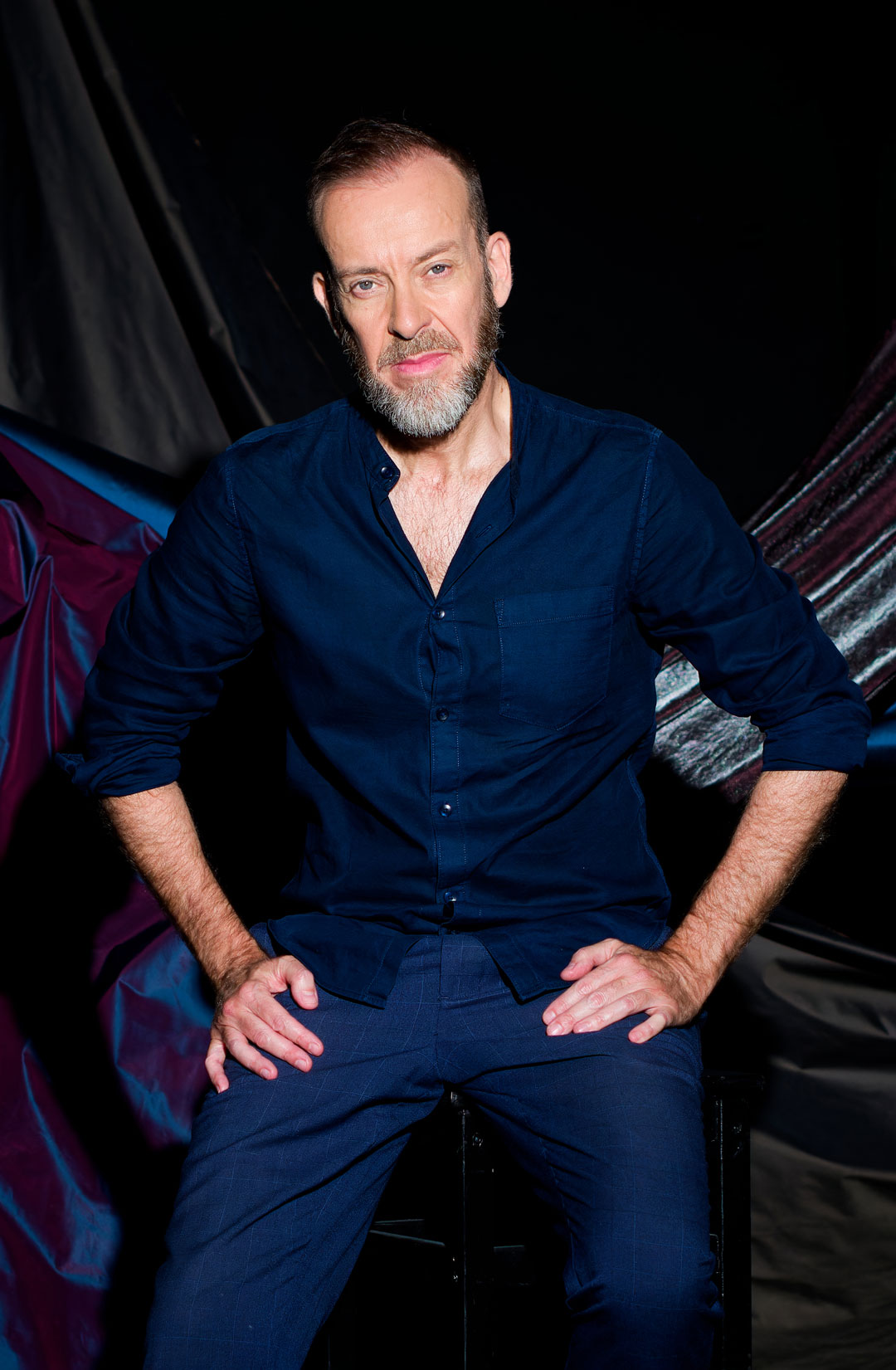
After establishing himself as a leading fashion designer, he went on to become one of the most sought-after costume designers in Portuguese theatre. At 59, José António Tenente has found a new rhythm, far from a market that has grown all too voracious and one he does not expect to return to.
Away from the catwalks for more than a decade, José António Tenente has never looked back. After almost thirty years in fashion, the Cascais-born designer traded the breathless rhythm of collections for the more human pace of theatre and, along the way, became one of Portugal’s leading costume designers.
His passion for the stage began in childhood and, in 1990, he took his first steps alongside Carlos Avilez, in King Lear for TEC (Teatro Experimental de Cascais). But fashion would soon take over his life, consuming his time and energy. By the time he walked away, his name was already written into the history of Portuguese fashion. Today, with the benefit of distance, he describes the process of freeing himself from a market which, he admits, no longer reflected who he was. He went back to where it started: the theatre. He now works with some of the Portugal’s most important theatre directors and choreographers, working on productions that have already taken him to France, Belgium, Switzerland, Austria, and the Netherlands. At 59, Tenente says he has finally found his own timing and a creative freedom that does not depend on leading, but on being part of an ensemble. And that, he insists, is worth more than any comeback.
Q: You’ve been away from the catwalk for 13 years. Have you ever regretted it?
A: No [laughs]. And I don’t think it’s going to happen. It was a long journey: almost 30 years. I did everything I had to do, and in truth, I began to have some creative doubts and a desire to do other things. I was particularly tired. These were very intense years. And costume design had always been something that I did from relatively early on. I started showing collections in 1986 and my first experience as a costume designer was in 1990.
Q: With Carlos Avilez (1939-2023).
A: Yes.
Q: It is interesting that in Portugal there has never been a serious marriage between cinema and fashion, whereas in theatre, by contrast, there have always been synergies.
A: Yes, in theatre there are several fashion designers who have worked and continue to work with directors and choreographers. In my case, it started very early, perhaps because I was always a very keen theatregoer and nurtured that side a lot. For me, it was very important and deeply rewarding, because I have always loved dance, theatre, and opera.
Q: Where did this interest come from?
A: I started going to the opera with my sister quite early on. I loved dance. When I was a boy, I took ballet classes at a time when that was not all that common. This artistic path was not so obvious, especially because there is no family tradition of anything connected to the performing or visual arts…
Q: But your sister took you to the opera.
A: Because she loved it too. Something very important, which is a common thread in my generation, is the key role television played. Public television, the only channel at the time, did a great deal to develop certain tastes. I remember that being how I first saw many things related to dance and theatre. Television played quite an important part. Then, through shared interests with friends and classmates, I started going to the theatre regularly. It grew from there, quite naturally. So when, professionally, I had the chance to move to the other side, I found it fascinating. I enjoyed it immensely, and those experiences were always very important.
Q: And yet, you ended up devoting yourself to fashion.
A: Yes. Then there was a period which, when I look at my CV in this field, feels almost like a hiatus, and it has a lot to do with the fact that I was so deeply involved in fashion and the effort it required on every level. It was the decade when I was starting out, and I had all these partnerships with different licensed ranges: eyewear, fragrance, pens, even collaborations with factories. We had a line of jeans. I was doing four shows a year: two full collections.
Q: Looking back, does all that seem a little insane today?
A: Almost [laughs]. No, I think it was all part of it, a very particular period of energy, vitality and drive. It all made sense. I was always quite rigorous and selective. I never liked doing anything just for the sake of it. It was never about slapping my signature on yet another product: that was not the idea. It was about feeling that the right conditions were there to do something interesting. But it was, in fact, intense work, very intense.
Q: What made you decide to step away?
A: It had to do with a certain tiredness and then with changes, not only in myself, but also the scene and in the industry. Things changed enormously, and I no longer recognised myself in this… rhythm, this voracity. When I started, it was normal for collections to follow the seasons.
Today, the seasons are just a pretext, because any brand will have four collections in a single season. You walk into a shop in the sales and the next collection is from the same season. Then there is a whole series of requirements for a brand that have gradually come to be seen as normal, even necessary.
Q: Such as?
A: Social media plays a hugely important role… There are figures who now have, at times, a more important role than the designer behind the brand. That seems strange to me. It is not to belittle anyone’s work, but from the moment when the people watching become more important than the work being shown…
Q: The purely business side…
A: But the business side itself I find normal. What seems a bit strange to me are the means used to achieve that business. Just the other day I saw an interview with an international designer who said something along the lines of: when people realise that the criteria for hiring a designer onto a team should not be the number of followers or likes they have on social media, when they realise it has more to do with talent, it may already be too late. It’s a quite pessimistic view of things, but I think it is realistic at the same time. All this has really taken off since I left fashion… When I made the decision, we were probably at the beginning of it.
Q: You say this almost like a prophecy…
A: No, not that. But it was almost the beginning of this big shift. Over these past ten years, things have intensified. Even on the international circuit, you can see it: the merry-go-round of creative directors at the big brands is crazy. It’s almost like football transfer season. Which I find rather absurd.
Q: What does that say about the current state of fashion?
A: I am not even sure it’s just about fashion. It mirrors this current tendency towards speed and superficiality. There is no time to go deeper into things, no time for anything to mature. I feel that work which is very consistent, which has a clear identity, is not particularly valued. We are always chasing some supposed novelty. It’s almost as if you have to throw everything away in order to start again. But “new” is also misleading, because very often what is new, or apparently new, for someone is only new because they have not seen something else. All you need is not to have been born before the 1980s, for instance. But it is the same across the board. The difficulty we have now in reading, in concentrating.
Q: What does a typical year look like for you?
A: I would never have imagined I would have as much work in costume design as I have had. On average, I do between ten and twelve projects a year. It’s a huge amount.
Q: Have you found your own rhythm?
A: I never imagined I would end up with so much work, and in fact I have many peaks of very intense periods, but the pace is nothing like before. Nothing at all. It is something else entirely. It’s not that obligation of having to produce a collection every six months, whether you are very inspired or hardly inspired at all. Now it is every three months. The whole burden meant having very little time. Very little time to look at things, to reflect, to evolve. It’s madness, it really is madness.
Q: Beyond time itself, what else is different about the kind of work you do now? Are the creative processes different, or not?
A: In essence, the creative process is not all that different. When I am on my own with my work, creating or thinking about what I’m going to, it feels very similar. I think the big difference is being part of a team that I am not leading. I am part of it. I am one element in that team, which is usually led by someone else. And that, for me, is also something that interests me.
Q: Was it easy to give up control?
A: It was, it was. It was very easy and perhaps even comforting to be part of the team and not be the…
Q: The maestro?
A: Yes [laughs]. Maybe that is good for me as well. It has been a very enriching experience, at times even overwhelming, the number of people I have worked with. Different people, people with very different perspectives. They have given me the chance to work with people and to get to know people and worlds that are hugely stimulating.
Q: Along the way, we find projects as varied as productions for the Companhia Nacional de Bailado (Portuguese National Ballet) and the most recent shows by director Tiago Rodrigues. What makes you say yes to a costume design?
A: Almost every project I have taken on has set me very interesting, very stimulating challenges. These days I often work repeatedly with directors and artistic companies, people with whom I have built professional relationships where things turned out well for both sides, so we share this wish to carry on. Like Tonan Quito, in fact the director I have worked with most, or the choreographers Paulo Ribeiro and Fernando Duarte… But there is always a first time. Very often it is the script, the writers or an artistic company I already knew, and I am glad when they get in touch and invite me to work with them and have this experience of joining an entire creative process.
Q: Which productions have made the most impression on you?
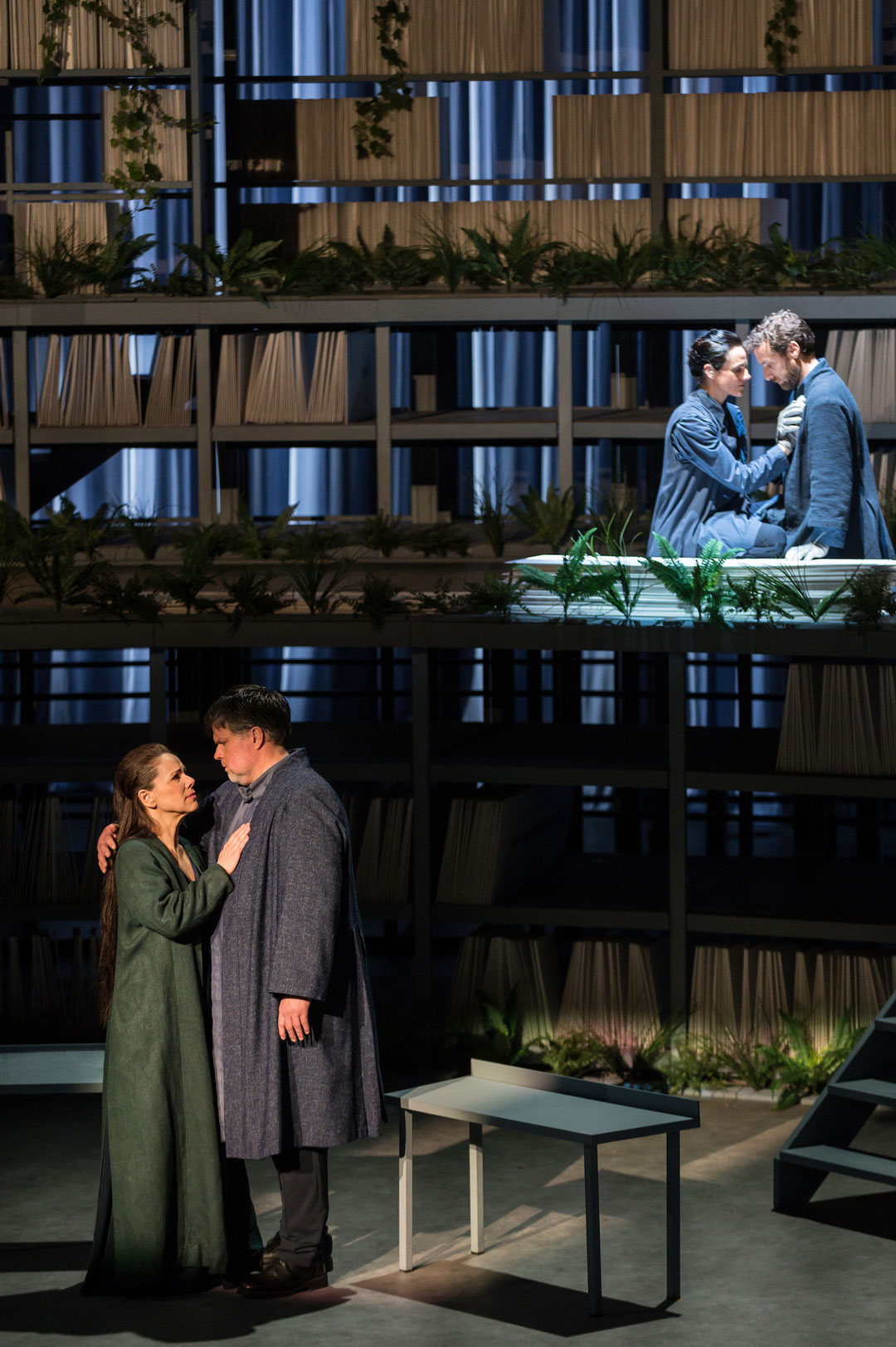
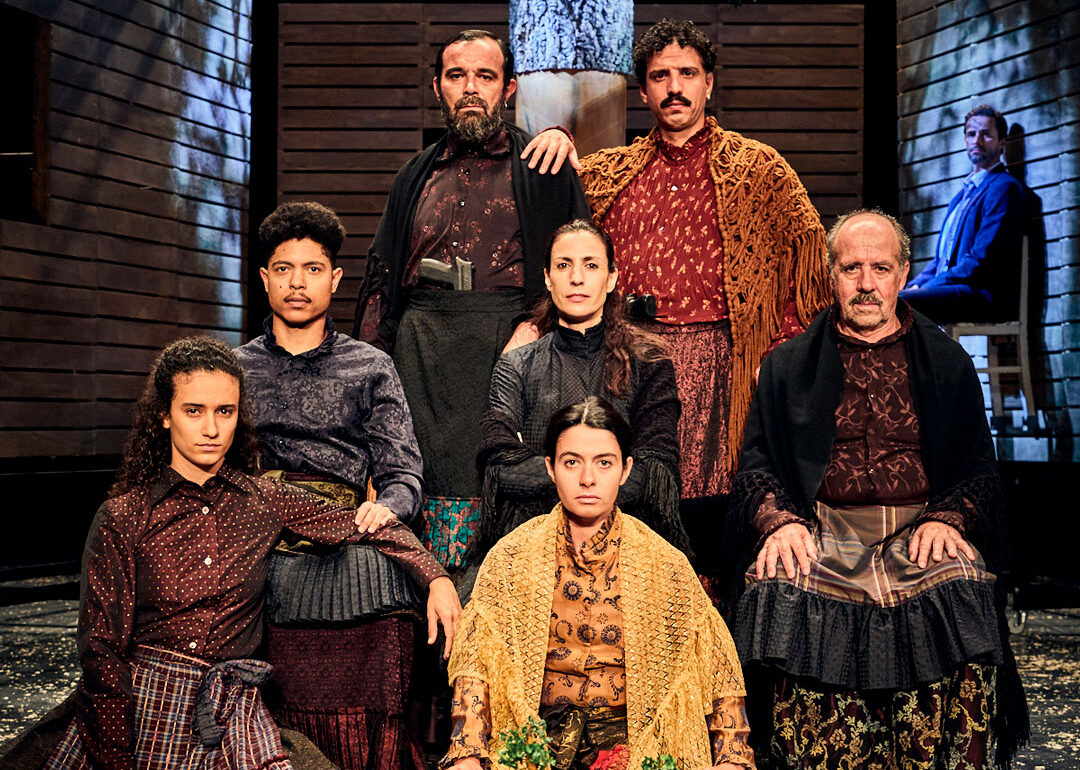
A: I’ve had the chance to work on projects with very different people and on very different scales. In the space of two months, for instance, I did Dino de Santiago’s opera, Adilson, an absolutely overwhelming experience, where the work intersects powerfully with real life, with everyday emotions, with stories that, if we are not confronted with them, we can go a whole lifetime without ever knowing. We are in a position of real privilege… and we barely realise it. A year ago, in a project with Raquel André, I had the opportunity to work with a blind artist, for example. Or with Marco Paiva, with deaf artists. And then there is Tiago Rodrigues, in fact another of these overwhelming experiences, both because of his writing and creative process and because of how far the projects travel. Then there is the question of scale. I designed costumes for the latest Formiga Atómica production, Só Mais uma Gaivota, which was a monologue, and then I did the adaptation of Os Maias for the entire CNB company. You go from a one-person show to almost 100 costumes. These are such different scales and projects that they force me to constantly recalibrate. And many of them, most of them, happen at the same time.
Q: How do you manage those overlaps?
A: I split my day between different projects. Sometimes, even on the same day, I might have a rehearsal in the morning for one production and fittings in the afternoon for another. It’s very varied. And that is also interesting for me, especially because these kinds of challenges do not usually come along at such a mature stage of life, do they?
Q: How old are you?
A: 59. When I changed my life, I was already nearly 50. Perhaps it is not like that now and the new generation has a different way of inhabiting the profession, without this idea that one choice will determine their whole life. To be completely honest: did I have doubts and fears? Of course I did. I thought this may not work out. But the truth is that these days I often joke that I don’t know how much longer I’ll be able to keep up the frantic pace I sometimes have to work at, yet at the same time it is still a challenge I enjoy. Not least because I went from often being one of the youngest people, even in my circle of friends, to now being almost always the oldest person on the team [laughs] That is very funny. This work gives me that contact with much younger generations and that also gives me different perspectives, chances to discover things that, otherwise, I probably would not be attuned to.
Q: The director Tiago Rodrigues is one of yours greatest accomplices in this new phase.
A: That too has been one of the most overwhelming experiences of my life.
Q: The first time you worked together was on Catarina e a Beleza de Matar Fascistas (2019)?
A: Yes. In fact, when I say that, people usually react by saying: “But haven’t you always worked together? No, I have known Tiago’s work for many years, but we only started working together on Catarina in 2019.
Q: How did that collaboration come about?
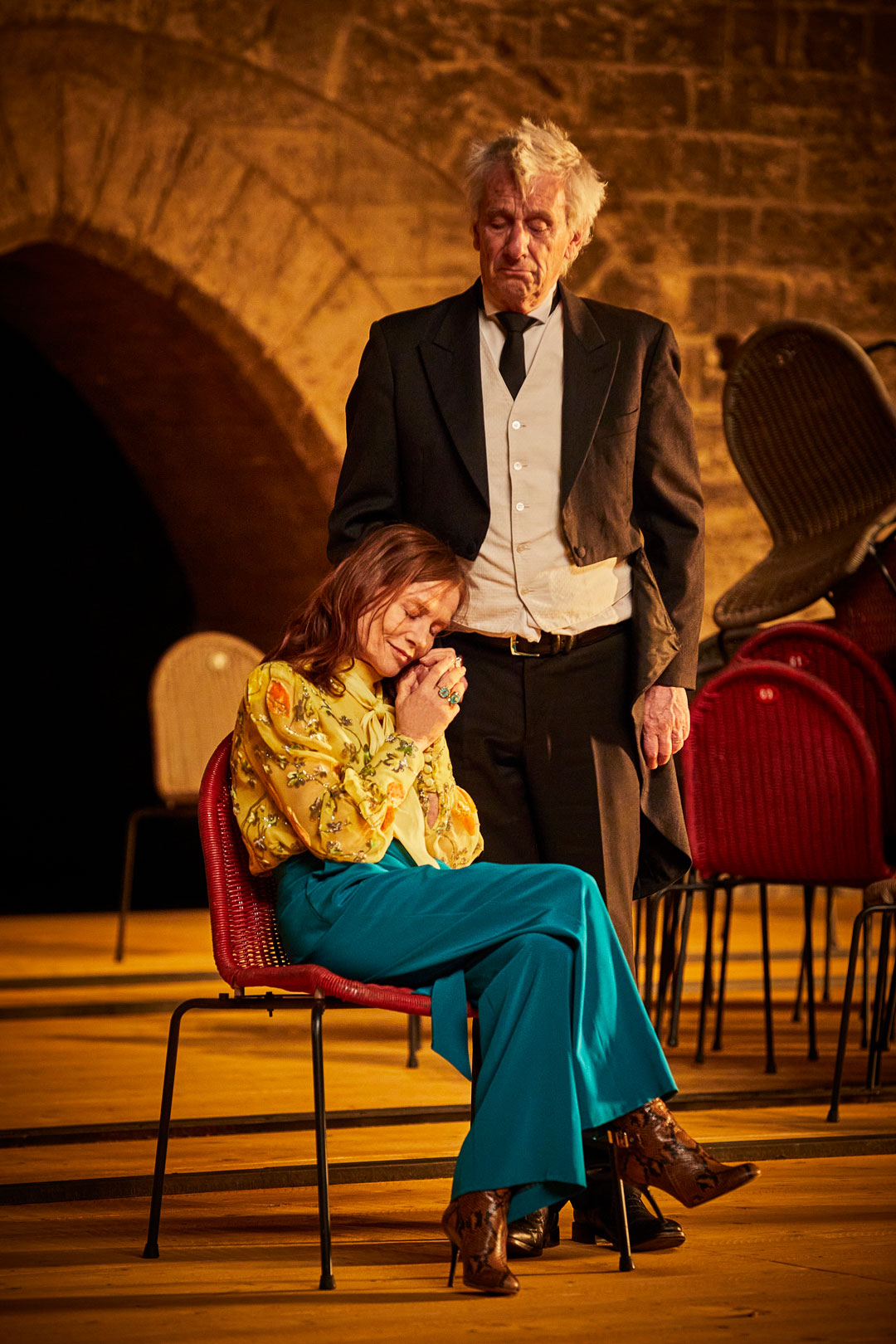
A: He invited me. In fact, at the time he invited me to that production and the next one, O Cerejal, at the same time.
Q: With Isabelle Huppert.
A: Yes. It was very challenging. With Tiago, I have almost always worked on large-scale productions, co-productions with the Festival of Avignon, the Comédie Française, so big organisations on a different scale…
Q: And with more resources, I imagine.
A: With resources, and with schedules planned so far in advance that we are forced to come up with creative proposals before rehearsals even begin! What has happened to me almost every time I work with Tiago is that I have the costumes ready before the script is finished [laughs]!
Q: How do you imagine a costume without a script, without a starting point?
A: There is an idea. Tiago has very clear ideas about what he is going to do, about what it’s going to be, but the script itself is not written; it is built day by day with the performers and the team. So this is what happened to me in these recent projects: both the set and the costumes are ready at the start of rehearsals. In other words, the actors, just as they have the script, also have an entire environment that they are already integrating into their work.
Q: Does a costume, like a script, go through changes during rehearsals?
A: That has been rare. One specific case comes to mind, but that had more to do with the actor’s build, because it was not the actor initially planned for, so we had to find a different solution. In Tiago [Rodrigues]’s case, in these most recent projects, both in Hécuba, não Hécuba and in La Distance, there are concrete references, to costumes as well as to the set, in the script. So it is all completely integrated. It is a very particular case, very specific to Tiago. But again, it is one of the most memorable encounters in my career.
Q: You always talk about your work with a smile and with obvious pleasure. Does working as a costume designer give you fewer headaches than working as a fashion designer?
A: Far fewer, without a doubt. It may also be a question of attitude to work, of feeling more like part of a team and not having everything rest solely on my shoulders. That automatically spares me a few headaches. This work ends up focusing much more on the creative side. Whereas my work as a fashion designer had the whole creative component, but then also all the business side behind it: commitments, the shop, salaries to pay. That gives you headaches, whether you like it or not.
Q: Are there still people who ask you to come back?
A: Yes, there are. It’s rare, but it still happens. In fact, there are still many people who do not know that I no longer work in fashion. Which I find extraordinary.
Q: Have you ever made exceptions?
A: Very few, especially recently. In the period that followed the closure, we still made a few exceptions. If, one day, someone very close to me, a very close friend or member of my family, I might possibly make an exception. But, by and large, I don’t think about it.
Q: In the fashion world, in recent years we have been obsessed with nostalgia and big comebacks. Do you not see yourself returning?
A: I don’t think so. The other day, funnily enough, I was talking to one of my former partners and he asked me: So, when is it happening? Isn’t there going to be a retrospective show? I have no such plans. Fortunately, I am extremely busy and this year I have not even had time to take all the holidays I wanted. Even so, this has been a line of work that allows me to have time, more time to stop. More time as well to do something I really love, which is going to shows. Even aside from my professional involvement, I am a spectator who is not quite compulsive, but almost.
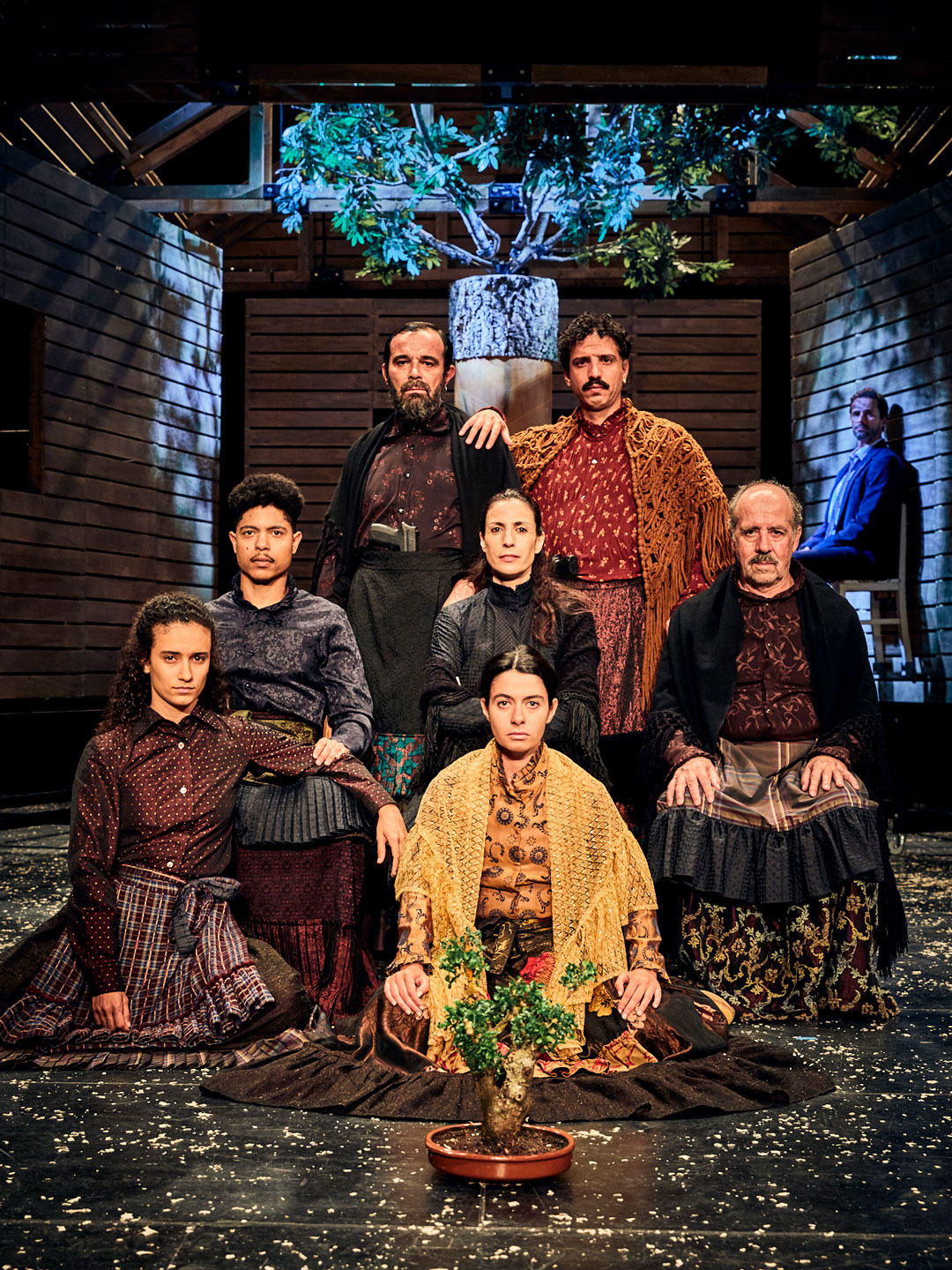
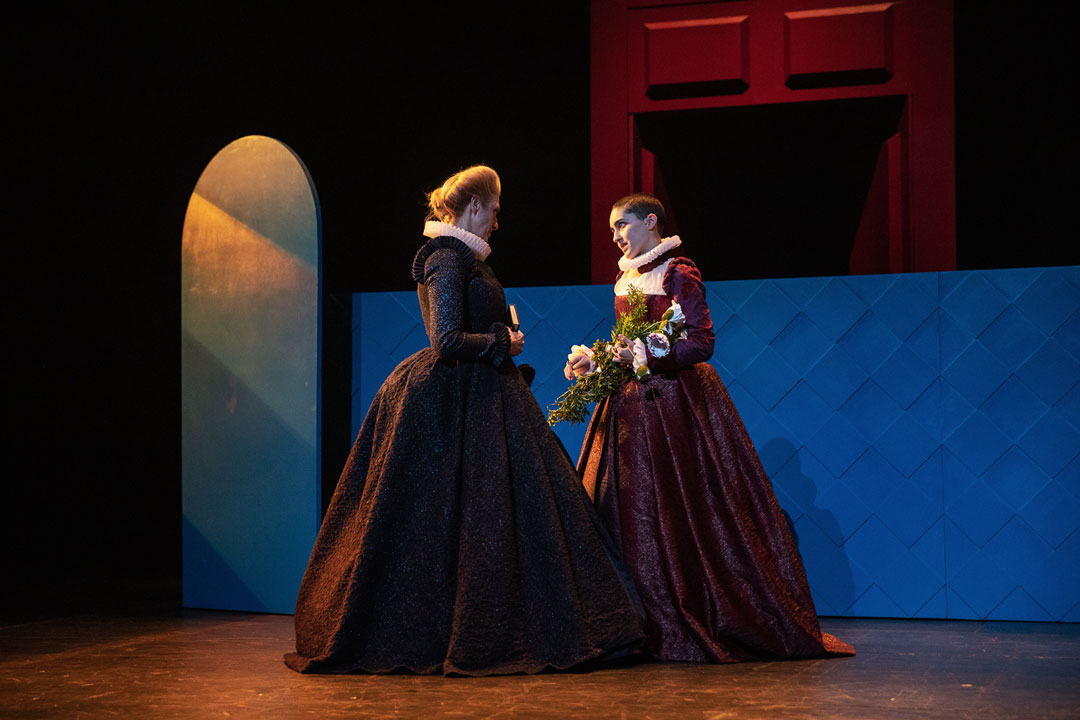
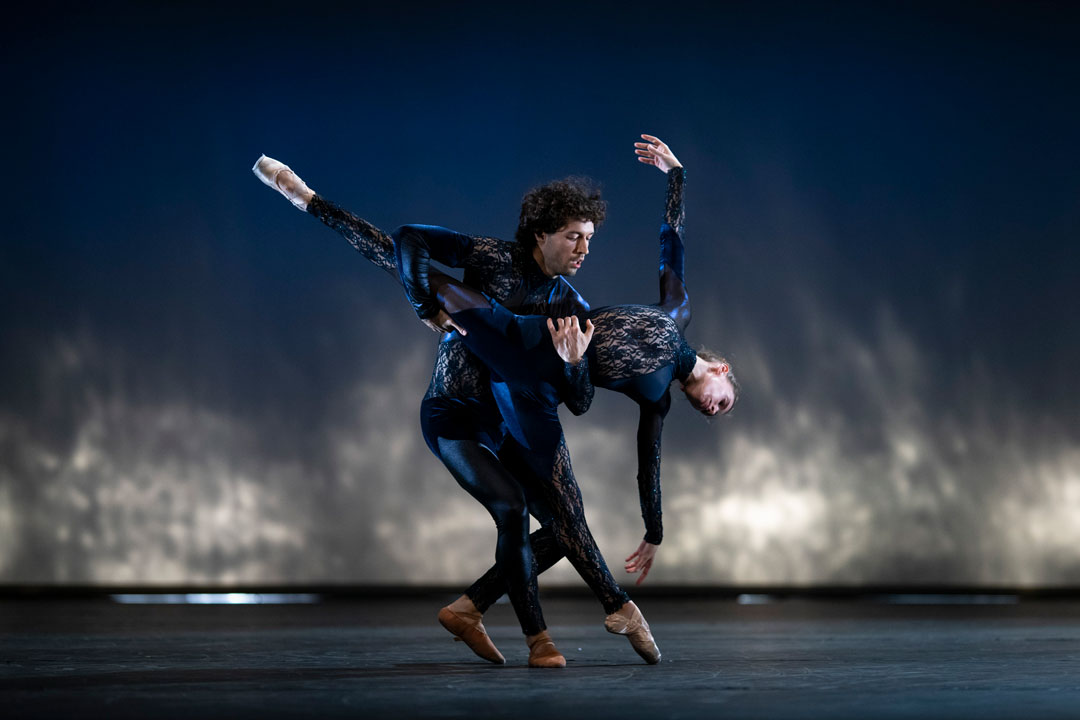
Photos: Joseph Banderet, Filipe Ferreira, Hugo David, Christophe Raynaud de Lage, Frederic Lovino || Productions per order: 2020 Catarina e a beleza de matar fascistas, de Tiago Rodrigues / 2019 Frei Luís de Sousa, encenação de Miguel Loureiro / 2023 Avant qu’il n’y ait le silence, coreografia de Fábio Lopez / 2021 La cerisaie, encenação de Tiago Rodrigues / 2024 Tristan et Isolde, encenação de Tiago Rodrigues