The future is now
Words: Parícia Barnabé
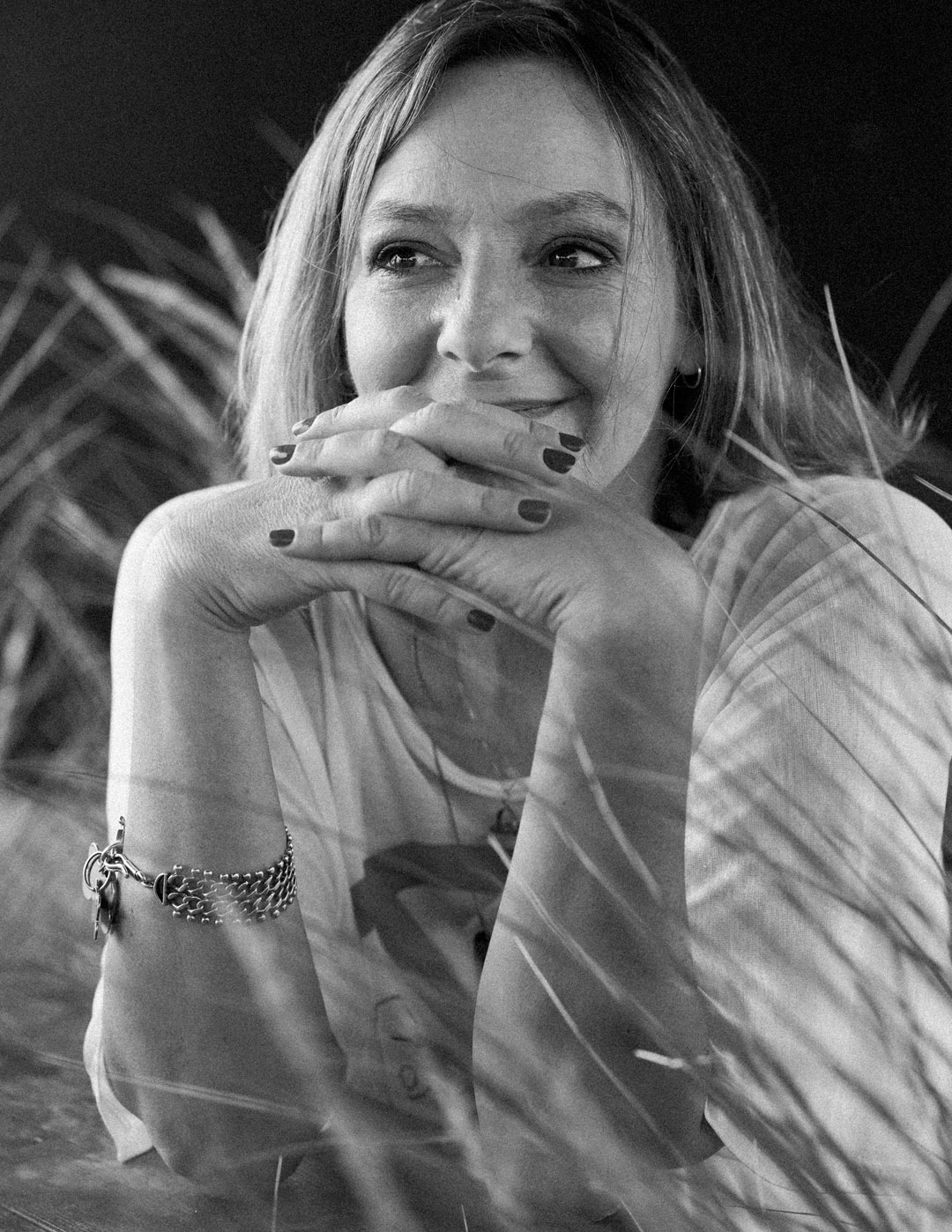
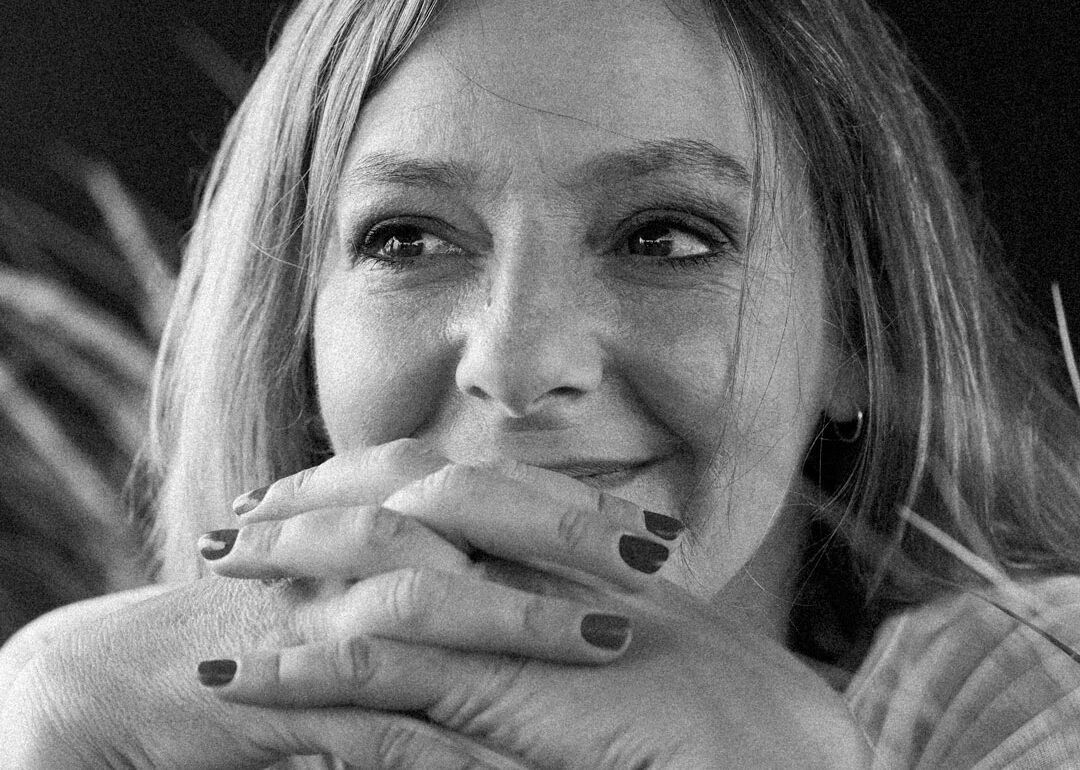
Photo: Frederico Martins for Portugal Fashion 25 Years campaign
A defining name in Portuguese fashion, Maria Gambina moves through time with her relevance intact in cool, colourful designs that look naturally towards the future.
Inspired by music and the city, Maria Gambina’s fashion has always been a compelling exercise in design that thinks in the present. Playful, versatile and sporty, long before sportswear took over, she was already sending trainers and colourful puffa jackets down the catwalks. As a child, she wanted to pursue sport, then painting, before life led her to fashion design where she brought that same energy and lightness, colour and openness.
Her clothes belong to no specific gender or time. They are for everyone who likes the practical and the casual. For busy people on the move, comfortable enough to keep up with the pace of daily life, yet attentive to those cool, special details that make pieces interesting and enduring. It’s not fashion for princesses, nor for the new clientele of artificial wealth. One of the many reasons we love Maria Gambina’s fashion is that it is never vulgar and never boring. As the artist she is, she knows how to take the pulse of the present and show us its grace, its irony, its unexpectedness and its poetry.
Q: Was fashion a goal for you or something you found along the way?
A: It was something I found along the way. I wanted to go to the Faculty of Fine Arts and become a painter, but as I was not sure if I had the grades to get in, I applied to CITEX to study fashion design. For a year I attended CITEX during the day and Fine Arts in the evening. In the very first year of the course, I won first prize in a competition, fell in love with dressmaking and pattern-cutting, and found that I could quickly turn my ideas into pieces of clothing in the end, I chose CITEX.
Q: What fascinates you about design in general and fashion design in particular?
A: What fascinates me about fashion is the design. The process, the research, the drawing, the construction of a piece, thinking about the details and finishes, working with volume… Ultimately, fashion became the tool I chose to express my ideas and tell my stories.
Q: What is your research process like? Is it neat and rationally driven or chaotic and instinctive?
A: It is intuitive, but it ends up being organised.
Q: For the Insista collection for spring-summer 2026, you said on Instagram that you were inspired by a new generation of Brazilian musicians. Tell us more.
A: The collection is called INSISTA em MIM and began with three songs by three musicians from the new generation of Brazilian music: Ana Frango Eléctrico, Zé Ibarra and Pedro Mizutani. In a very personal way, I translate the lyrics and melodies into colours, volumes, jacquards, construction details and garment finishes.
Q: Music has always been very present in your creative life and beyond, hasn’t it? Do you have favourite genres, musicians, or sounds that regularly inspire you?
A: Yes, always. Because I can see colours, volumes and silhouettes in melodies, and because they make me want to tell stories. Yes, I do, although I usually say that I like all musical styles, as long as they are good (chuckles). I never go looking for inspiration. Sometimes it may come in the form of music. It could even be the same genre or the same artist, but that has never happened to me.
Q: What other arts have always moved you, or have done so more recently?
A: I have always been passionate about painting, architecture and graphic design. Recently, I have also seen some incredible work in ceramics, which has really sparked my curiosity.
Q: Your love of sport has also been clear from the beginning, long before it became fashionable. Are you sporty yourself, or is it the comfort and nonchalance of sportswear that appeals to you? Where does that come from?
A: When I reached the year l had to choose my area of study in secondary school, I chose sport. I loved competitive sports, the kits, the materials, the colours and the graphics ever since I was a child. I eventually gave up that path, and the passion became inspiration. Unfortunately, I do not do much sport.
Q: A certain sporting classicism is back, especially one inspired by elite sports, almost as a response to the “excessive” democratisation of fashion. What do you think of that?
A: I see it as a fashion trend. It will pass.
Q: And what do you think of the fact that nowadays everyone seems to have a fashion brand, from footballers to influencers, and that sometimes everything is placed in the same category as serious fashion designers?
A: The profession of fashion designer is very demanding. It brings together a whole range of skills, from creative thinking to the sewing machine. It is an area that requires a great deal of knowledge and know-how. It does not live on image alone. When I see everything mixed together on the platforms that promote Portuguese fashion, it feels like a stab wound, as if all our immense dedication, all the enormous difficulties we have been through, the huge investment we have had to make, the talent… were worth nothing.
Q: Why did you stop doing fashion shows? Did you want to free yourself from the constraints of the traditional fashion circuit? Does it no longer make sense to you? And do you miss it sometimes?
A: I stopped doing fashion shows because I felt the investment was no longer worthwhile. I sell in my own shop and online, so it makes no sense to present a collection six months in advance, as I do not sell wholesale. I also began to feel that I was feeding a spectacle in which the audience, rather than the collections, had become the protagonist. People go to fashion events in order to create content to promote themselves on social media. And yes, I miss it.
Q: Looking at fashion today, where the designer is a creative director and the audience is no longer the well-travelled, demanding elite it once was, what do you see?
A: I see a vanity fair.
Q: Why does fashion fascinate people so much, especially younger people in search of an identity? And even more so now, when social media exposes self-esteem so intensely?
A: Because it looks easy and there’s a lot of glitter around it.
Q: Is fashion becoming a little banal with the rise of the Internet? Or is it simply moving away from luxury and becoming a simple design object, like any other?
A: Honestly, I do not think about it very much. I try to step back from it and focus on my work, so that it is always special.
Q: Thirty years of the brand. When you look back, what stands out? And what continues to inspire you and drive you, thankfully, to keep stretching creative boundaries in a market as difficult and competitive as fashion is today?
A: When I look back, I wonder how it is possible that a girl who wanted to study sport, who passed through Fine Arts and ended up falling in love with fashion design, has done so much. And what stands out is that enormous passion. Only that can justify all this madness.
Q: What does being Portuguese mean to you? In such a globalised age, does it make even more sense to take care of our roots?
A: We must never forget our roots. They are the foundation of who we are. I am very proud to be Portuguese. Proud of our history, our roots and our traditions. For me, it means belonging to an admirable people: kind, welcoming and helpful. Portugal is a beautiful country, with wonderful food and a mild climate, but unfortunately with a very low standard of living, where Portuguese people are unable to enjoy a good quality of life. I have never imagined being anything other than Portuguese.